Claire Yang's Posts (42)

Sort by

#6 Bi-weekly Learning Journal

A Korean poem that I read recently is written by Kim Seung Hee who was born in 1952 and started her career in 1973. She is widely admired as a feminist surrealist and has received several major awards. The following is the original poem.

희망이 외롭다

남들은 절망이 외롭다고 말하지만
나는 희망이 더 외로운 것 같아,
절망은 중력의 평안이라고 할까,
돼지가 삼겹살이 될   때까지
힘을 다 빼고, 그냥 피  웅덩이 속으로 가라앉으면 되는 걸 뭐……
그래도 머리는 연분홍으로 웃고      있잖아, 절망엔
그런       비애의 따스함이 있네


희망은 때로 응급처치를 해주기도 하지만
희망의 응급처치를 싫어하는 인간도 때로 있을 수 있네,
아마 그럴 수 있네,
절망이 더 위안이 된다고 하면서,
바람에 흔들리는 찬란한 햇빛 한 줄기를 따라
약을 구하러 멀리서 왔는데
약이 잘 듣지 않는다는 것을 미리 믿을 정도로
당신은 이제 병이 깊었나,


희망의 토템 폴인 선인장……
사전에서 모든 단어가 다 날아가버린 그 밤에도
나란히 신발을 벗어놓고 의자 앞에 조용히 서 있는
파란 번개 같은 그 순간에도
또 희망이란 말은 간신히 남아
그 희망이란 말 때문에 다 놓아버리지도 못한다,
희망이란 말이 세계의 폐허가 완성되는 것을 가로막는다,
왜 폐허가 되도록 내버려두지 않느냐고
가슴을 두드리기도 하면서
오히려 그 희망 때문에
무섭도록 더 외로운 순간들이 있다


희망의 토템 폴인 선인장……
피가 철철 흐르도록 아직, 더, 벅차게 사랑하라는 명령인데


도망치고 싶고 그만두고 싶어도
이유 없이 나누어주는 저 찬란한 햇빛, 아까워
물에 피가 번지듯……
희망과 나,
희망은 종신형이다
희망이 외롭다

Translation:

Hope is Lonely

Though others say ‘despair is lonely’,
hope is even lonelier to me.
Shall I say that despair is peaceful as gravity?
Until the time the pig becomes pork
all it has to do is sink into
its pooling blood, drained of all strength
the pink head still smiles doesn’t it? In despair
sorrow has that sort of warmth.

Hope at times offers first aid but
sometimes there are people who don’t want hope’s first aid,
could be.
While saying that despair offers more comfort,
pursuing one ray of sunlight trembling in the breeze,
coming from afar to get medicine.
Your sickness having grown deeper,
you already trust it will not work.

Hope’s totem pole is a cactus…

Even on that night when all the words from the dictionary flew away,
even at that moment like blue lightning,
after taking off shoes side-by-side, standing quietly by a chair,
again the word hope barely remained
but because of that word hope, all cannot be discarded.
The word hope prevents the completion of the world’s ruins.
Asking why not let the ruins continue
while beating our breasts -
rather because of that hope
times are fearfully lonely.

Hope’s totem pole is a cactus,
it’s a command to love so fully blood keeps pouring out.

Even though it wants to quit, to run away,
sunlight pointlessly shares itself, what a waste,
like blood spreading in water…
hope and I,
hope is a life sentence,
hope is lonely.


Read more…

#5 Bi-weekly Learning Journal

How to count 1-100 in Korean

 Numerals Sino Korean Numbers Native Korean Numbers Hanja
 0 영/공 – 零/〇
 1 일 하나 一
 2 이 둘 二
 3 삼 셋 三
 4 사 넷 四
 5 오 다섯 五
 6 육 여섯 六
 7 칠 일곱 七
 8 팔 여덟 八
 9 구 아홉 九
 10 십 열 十
 11 십일 열 하나 十一
 12 십이 열 둘 十二
 13 십삼 열 셋 十三
 14 십사 열 넷 十四
 15 십오 열 다섯 十五
 16 십육 열 여섯 十六
 17 십칠 열 일곱 十七
 18 십팔 열 여덟 十八
 19 십구 열 아홉 十九
 20 이십 스물 二十
 21 이십 일 스물 하나 二十一
 22 이십 이 스물 둘 二十二
 23 이십 삼 스물 셋 二十三
 24 이십 사 스물 넷 二十四
 25 이십 오 스물 다섯 二十五
 26 이십 육 스물 여섯 二十六
 27 이십 칠 스물 일곱 二十七
 28 이십 팔 스물 여덟 二十八
 29 이십 구 스물 아홉 二十九
 30 삼십 서른 三十
 40 사십 마흔 四十
 50 오십 쉰 五十
 60 육십 예순 六十
 70 칠십 일흔 七十
 80 팔십 여든 八十
 90 구십 아흔 九十
 100 백 – 百
Read more…

#4 Bi-weekly Learning Journal

How to order a drink or food in Korean? 

1. food
가) 여기 메뉴판 좀 주세요. Would you bring a menu, please?
나) 뭐가 제일 맛있어요? what is the best dish here?
다) 추천 좀 해주세요. Please recommend something to me. 
라) 뭐가 제일 인기있어요? What is the most famous dish?
마) 제일 빨리 되는 게 뭐예요? what is the fastest dish to cook for?
바) 안 맵게(짜게, 달게) 해주세요. Please cook this not spicy(salty, too sweet)
사) 채식 메뉴 있나요? Is there a vegetarian menu?
아) 바짝 익혀주세요. Please cook well-done. 
자) 땅콩 알러지가 있는데, 땅콩 좀 빼주세요. I am allergic to peanut, please do not put peanut in my dish. 
차) 물수건 좀 주세요. (very Korean culture, when you go to Korean traditional restaurant, especially for meat restaurant, they give u a (hot) towel, just like aeroplane service). Please give me a wet hand towel.

2) drinks
가) 커피(홍차, 차, 물) 주세요. Please give me a cup of coffee(red tea, tea, water)
나) 맥주(소주, 양주, 쏘맥, 칵테일) 한 병(잔) 주세요. plz give me a bit(glass) of beer(soju, spirits, soju-beer cocktail, cocktail)
다) 인기있는 안주가 뭐에요? what is a popular side dish for drinks?
라) 버드(카스, 하이트) 한 병에 얼마에요? how much is a bit of bud(cars)?
마) 코로나에 레몬(라임) 조각 넣어주세요. plz give me a bit of corona with lemon(lime)
바) 잭콕 한 잔 계산해주세요. how much is for Jack Coke?

Read more…

Cultural post #8

Myeong-dong

Bustling Myeong-dong is a shopping area packed with international fashion brands, luxury department stores and homegrown cosmetics shops. Casual eateries offer Korean dumplings and ginseng chicken soup, while street vendors sell Japanese and Thai snacks. Shows mixing folk music and drama are staged at Myeongdong Nanta Theatre. Nearby 19th-century Myeong-dong Cathedral features a Gothic-style bell tower.

Image result for myeongdong

Read more…

Cultural post #7

Blackpink

Blackpink is a South Korean girl group formed by YG Entertainment, consisting of members Jisoo, Jennie, Rosé and Lisa. Blackpink is making a comeback with an EP album titled "Kill This Love." The group's name was conceived to contrast with the perception of femininity commonly associated with the color pink. When Blackpink debuted, their label YG Entertainment said the name intends to convey that the group embodies more than beauty.Image result for blackpink

Read more…

Cultural post #6

Reply 1988

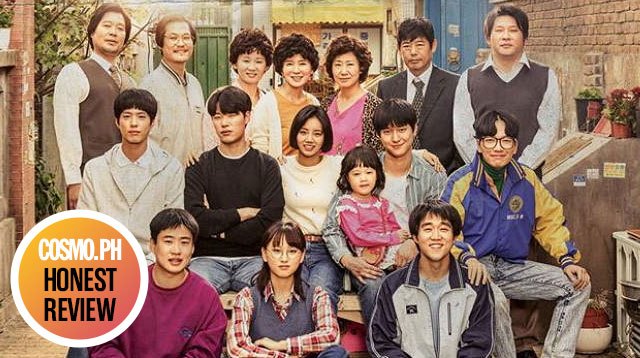
Reply 1988 (Hangul: 응답하라 1988) is a South Korean television series. Set in the year 1988, it revolves around five friends and their families living in the same neighbourhood of Ssangmun-dong, Dobong District, Northern Seoul. The plot of the drama is very good and you will never get bored. The ending is touching and it's worth watching.Image result for please answer 1988

Read more…

Cultural post #5

Bibimbap

Bibimbap (비빔밥) is a Korean rice dish. The term “bibim” means mixing various ingredients, while the “bap” noun refers to rice. Bibimbap is served as a bowl of warm white rice topped with namul and gochujang, soy sauce, or doenjang. More traditional and authentic versions of Bibimbap are made with raw beef and raw egg yolk along with other vegetables while people can change the recipe according to their preferences.

Image result for bibimbap

Read more…

Cultural post #4

I am going to introduce a Korean fashion website that sells Korean designer brands. It provides free shipping to United States for orders over $150. The overall price is pretty expensive but the design and quality is good.12746868487?profile=original12746869464?profile=original12746870065?profile=original

Read more…

Cultural post #3

Must-Know Korean Words from CHUNG HA - Gotta Go (청하 12)

  • 말투 it’s a way of speaking 저 사람 말투가 건방져 that person’s way of speaking is arrogant
  • 아쉬워 It’s a shame 아쉽다 such a shame; such a bummer
  • 어떡해 what should I do?
  • 벌써 already 벌써 왔어? You came already?
  • 솔직히 honestly 솔직히 나 개 싫어 Honestly I don’t like him

12746868673?profile=original

Read more…

Cultural post #2

I went to a Korean Resturant called "Zaam" today. It's like the Korean Chipotle and it has Bibimbap, ramen and bubble tea. I really like the place because the price is reasonable and the taste is really good. 

12746867292?profile=original12746867694?profile=original

Read more…

Cultural post #1

Recently, BLACKPINK released a new song called "Kill this love".

I studied the lyrics and tried to learn the song.

[Verse 1: Jennie]
천사 같은 "hi" 끝엔 악마 같은 "bye"
매번 미칠듯한 high 뒤엔 뱉어야 하는 price
이건 답이 없는 test
매번 속더라도 yes
딱한 감정의 노예
얼어 죽을 사랑해

[Verse 2: Lisa]
Here I come kickin' the door, uh
가장 독한 걸로 줘, uh
뻔하디 뻔한 그 love
더 내놔봐 give me some more
알아서 매달려 벼랑 끝에
한마디면 또 like 헤벌레 해
그 따뜻한 떨림이 새빨간 설렘이
마치 heaven 같겠지만
You might not get in it

[Pre-Chorus: Jisoo & Rosé]
Look at me, look at you
누가 더 아플까
You smart 누가 you are
두 눈에 피눈물 흐르게 된다면
So sorry 누가 you are
나 어떡해 나약한 날 견딜 수 없어
애써 두 눈을 가린 채
사랑의 숨통을 끊어야겠어

[Chorus: All, LisaJennie]
Let's kill this love!
Yeah, yeah yeah, yeah yeah yeah
Rum, pum, pum, pum, pum, pum, pum
Let's kill this love!
Rum, pum, pum, pum, pum, pum, pum

https://www.youtube.com/watch?v=2S24-y0Ij3Y

Read more…

#3 Bi-weekly Learning Journal

Bi-weekly Learning Report

We learned about money expression and how to describe the time period of the day. We also studied expression about different seasons and how to describe people and object by numbers.

새벽: dawn

아침: morning, breakfast

점심: noon, lunch

저녁: afternoon, dinner

밤: night

오전: AM

오후: PM

그제: day before yesterday

어제: yesterday

오늘: today

내일: tomorrow

모레: day after tomorrow

봄: spring

여름: summer

가을: fall

겨울: winter

날씨: weather

춥다: cold

덥다: hot

Money: 만오천원 (15,000 won), 십오만원 (150,000 won), 천오백원 (1,500 won), 백칠십원 (170 won)

Number of things: 영개, 한개, 두개, 세개, 네개…열개, 스무개, 서른개…

Age: 한 살, 두 살, 세 살, 열 살, 스무 살, 서른 살….아흔살

# of people: 한 명, 두 명, 세 명, 네 명, 다섯 명, 열 명, 스무 명, 서른 명…

Read more…

#2 Bi-weekly Learning Journal

Bi-weekly Learning Report

We continued to learn time expression and easy sentence to describe the time. We also learned how to ask and answer questions like “what day is your birthday?” and “what time it is now?” and “what date is today?”

Time expression:

Hour: 시

Minute: 분

Second: 초

For example:

(1)1:00 한 시

(2)3:10 세 시 십분

(3)4:30 네시 삼십분(네시 반)

(4)5:45 다섯 시 사십오 분/여섯 시 십오 분 전

(5)12:55 열두 시 오십오 분/한 시 오분 전

(6)9:15 아홉시 십오 분

Phrase:

What time it is?

지금은 몇시입니까?

What day is your birthday?

생일이 몇 월 며칠이에요?

Read more…

# Bi-weekly Learning Journal

Bi-weekly Learning Report

In the first two weeks, we learned about how to describe date and time in Korean. These phrases are commonly used in everyday life.

Month:

January/February/March/April/May/June/July/August/September/October/November/December

일월/이월/삼월/사월/오월/유월/칠월/팔월/구월/시월/십일월/십이월

Week:

Sunday/Monday/Tuesday/Wednesday/Thursday/Friday/Saturday

일요일/월요일/화요일/수요일/목요일/금요일/토요일

Read more…

Reflection Paper #2

ReflectionPaper2.docx

My learning experience as a self-directed language learner has been great during this semester. Learning a new language has always been exciting since studying a new language could help me gain insight in both linguistic side and cultural side.


I found myself as an active cultural explorer. In my learning experience, I constantly raise questions about the similarities and differences between Korean and Chinese. Then, I would look up the Korean linguistic history after class and found out more about the link between these two languages. The modern Korean writing system, Hangul, was devised in 1443 during the reign of King Sejong, perhaps the greatest monarch of the Yi Dynasty. Before hangul, other Korean scripts used a complex system of Chinese characters to represent the sounds of Korean. However, the differences between Chinese and Korean make it hard for Chinese characters to adequately denote Korean speech. At that time, only the elite could afford the time and money to study Chinese. Therefore, King Sejong invented the Korean language for writing in order to educate more people.


I enjoy learning the history behind my target language and find it fascinating to understand the development of my target language. However, writing has been the biggest challenge for me. The writing system of Korean has little connection with the Chinese, so I have to learn a new system and grammars. In order to develop my writing skills, I will continue to study vocabulary and grammar rules on a weekly base.


I found learning the Hangul introduction textbook useful. The textbook is very well structured. The book starts from the vowels and consonants and has quizzes in every chapter. I found the material very easy to understand since the chapter is divided into reading, listening and writing parts clearly, which is easy to follow and refer to after class. The textbook has a brief vocabulary flashcard in the end of each chapter. I could use them to review the material and write down in my notebook as a vocabulary list. My tutor and I have weekly quizzes, which help me strengthen my language ability and keep up with my study plan. Also, I found it very helpful to learn from YouTube channels. There are videos on YouTube that teach language in different ways. For example, since I am interested in K-pop, there are channels that explain K-pop lyrics by analyzing vocabulary usage and sentence composition. Learning from the subject I am interested in fosters my language study and also raises my passion in my target language.


According to my study plan, I learned basic daily communication during this semester. I would like to learn more complex sentence composition, as well as cultural-related subjects. I am interested in the similarity and differences between Korean culture and Chinese culture in aspects of etiquette. Therefore, I would like to learn more about the Korean linguistic history and also the formal usage of Korean language.

Read more…

Learning Journal #10

If I were to receive a grant for linguistics research, I would start by analysing the similarity and differences between Korean culture and Chinese culture in aspects of etiquette. Li, a concept often rendered as “ritual,” “proper conduct,” or “propriety.” Originally Li denoted court rites performed to sustain social and cosmic order. Confucians, however, reinterpreted it to mean formal social roles and institutions that, in their view, the ancients had abstracted from cosmic models to order communal life. From customary patterns, Li came to mean conventional norms, yielding a new concept of an internalized code of civility that defined proper human conduct. In South Korea, etiquette or the code of social behavior that governs human interactions is largely derived from Korean Confucianism and focuses on the core values of this religion. In addition to general behaviour, etiquette in South Korea also determines how to behave with respect to social status. Since both etiquette culture embraces Confucian, they share a lot of similarities in different social aspects. I would love to do more research and conduct surveys to see how it influences people's lives.

Read more…

SDLC 110: Bi-Weekly Learning Journal #6

This week, I learned the Korean numbers and learned how to ask birthday and answer what day is my birthday. I also learned how to describe today's date.

  • 생일이 언제입니까?  What day is your birthday?
  • 오늘이 몇월 며칠입니까? What day is today?

MONTH:
일월 January

이월 February

삼월 March

사월 April

오월 May

유월 June

칠월 July

팔월 August

구월 September

시월 October

십일월 November

십이월 December

DATE:

일일1 이일2 삼일3 사일4
오일5 육일6 칠일7 팔일8
구일9 십일10 십일일11 십이일12
십삼일13 십사일14 십오일15 십육일16
십칠일17 십팔일18 십구일19 이십일20
이십일일21 이십이일22 이십삼일23 이십사일24
이십오일25日 이십육일26日 이십칠일27 이십팔일28日
이십구일29 삼십일30日 삼십일일31

Read more…

SDLC 110: Bi-Weekly Learning Journal #5

This week, I learned some nouns about things in a classroom, and also learn to ask basic questions.

 
 (n)       book
(n)        pen
공책(n)     notebook
연필(n)     pencil
지우개(n)  eraser
학생(n)     student
선생님 (n) teacher
교실 (n)    classroom
의자 (n)    chair
칠판(n)     blackboard
교과서(n)  textbook
지도(n)     map

A: 이것이 무엇입니까?

B: ______________________.

A: 이것은 무엇입니까?

B: _______________________.

Read more…

SDLC 110: Bi-Weekly Learning Journal #4

This week I learned some common verbs and learned how to use them in basic sentences.

I practiced speaking, writing and I also used flashcards to help me memorize.

다 write

글을 써요.
I’m writing.

말하다 speak

한국어로 말해요.
I’m speaking Korean.

보다 watch

영화를 봐요.
I’m watching a movie.

타다 take

버스를 타요.
I’m taking the bus.

사다 buy
책을 사요.

I’m buying a book.

가다 to go

Read more…

SDLC 110: Bi-Weekly Learning Journal #3

This week we learned consonants. I practiced pronunciation and writing and created flashcards to help memorize.

Consonant

Consonant LetterSound
G
N
D
R/L
M
B
S
silent if at beginning of syllable, NG if at ending.
J
CH
K
T
P
H

vocabulary

  • 왜 = Why
  • 여기 = Here
  • 오빠 = Girl’s Older Brother / Boyfriend
  • 년 = year
  • 오늘 = today
  • 어제 = yesterday
  •  주 = week
Read more…