Raymond Luo's Posts (38)

Sort by

Cultural Post #4 Korean II

For this final cultural post, I really want to talk about my favorite song of the year -- 에잇 (eight) ft. SUGA by IU.  

So are you happy now (happy now)
Finally happy now yeah (yeah)
뭐 그대로야 난 (그대로야 난)
다 잃어버린 것 같아
모든 게 맘대로 왔다가 인사도 없이 떠나
이대로는 무엇도 사랑하고 싶지 않아
다 해질 대로 해져버린
기억 속을 여행해
우리는 오렌지 태양 아래
그림자 없이 함께 춤을 춰
정해진 이별 따위는 없어
아름다웠던 그 기억에서 만나
Forever young
우우우 우우우우 우우우 우우우우
Forever we young
우우우 우우우우
이런 악몽이라면 영영 깨지 않을게 (슈가)
섬 그래 여긴 섬 서로가 만든 작은 섬
예 음 forever young 영원이란 말은 모래성
작별은 마치 재난문자 같지
그리움과 같이 맞이하는 아침
서로가 이 영겁을 지나
꼭 이 섬에서 다시 만나
지나듯 날 위로하던 누구의 말대로 고작
한 뼘짜리 추억을 잊는 게 참 쉽지 않아
시간이 지나도 여전히
날 붙드는 그 곳에
우리는 오렌지 태양 아래
그림자 없이 함께 춤을 춰
정해진 안녕 따위는 없어
아름다웠던 그 기억에서 만나
우리는 서로를 베고 누워
슬프지 않은 이야기를 나눠
우울한 결말 따위는 없어
난 영원히 널 이 기억에서 만나
Forever young
우우우 우우우우 우우우 우우우우
Forever we young
우우우 우우우우
이런 악몽이라면 영영 깨지 않을게

[Verse 1: IU]
So are you happy now?
Finally happy now, are you?

Well, I'm exactly the same
I think I've lost everything
Everything comes as it pleases and leaves without a goodbye

Like this, I don't want to love anything
Where the sun has set, as far as the sun sets
I travel in those memories

[Chorus: IU]
Under an orange sun
We dance with no shadows

There is no such thing as decided farewells
Meet me in that memory that was once beautiful
Forever young

[Post-Chorus: IU]
Oh oh oh, oh oh oh oh
Forever we young
Oh oh oh, oh oh oh oh
If it is this kind of nightmare, I won't ever wake up

[Verse 2: SUGA]
(SUGA)
Island, yeah, here is an island
A small one that we made with each other
Yeah, um, forever young, the word "forever" is a sandcastle
A farewell is like a disaster cast
A morning greeted along with yearning
Let us both pass this eternity
Surely meet once more on this island

[Verse 3: IU]

Like what someone said as they were consoling me, passing
It isn't that easy to forget a memory merely big as a handspan
Even as time goes by, still
At that place which takes hold of me

[Chorus: IU]
Under an orange sun
We dance with no shadows
There is no such thing as decided goodbyes
Meet me in that memory that was once beautiful
Forever young

[Bridge: IU]
We lie down atop of each other
Share stories that aren't of sorrow
There is no such thing as gloomy endings
I will forever meet you in this memory
Forever young

[Post-Chorus: IU]
Oh oh oh, oh oh oh oh
Forever we young
Oh oh oh, oh oh oh oh
If it is this kind of nightmare, I won't ever wake up

The following link is the interpretation of the lyrics and the music video produced by IU. It is surprising and super informative of what IU wants to convey through this song. It would be great if you can check the video as the music is made for IU's best friends Sulli, Goo Hara, and Jonghyun. She tries to send her misses and loves to her three friends who all died because of depression. This song, together with the music video, is very touching yet shocking at the same time. 
Interpretation

EIGHT MV

Read more…

Bi-Weekly Learning Journal #8 Korean II

For this week's meeting, I was able to wrap up what I've learned for this semester by taking a test over the things I learned in the past few weeks. Even though from the journals, the things I learned weren't organized and there were also some repetitive activities, my primary goal since the beginning of this semester was to build foundations for speaking, reading and listening. By revisiting the alphabet over and over again, I finally was able to spell words and read texts in Korean (It's been too long). Also, in the group meetings, we were watching the "Reply 1994" from the well-known "Reply" series. By watching this, I was able to practice my ability to speak naturally and get used to listening to native speakers talk (Even though the characters in the drama speak Korean with heavy accents). 

Learning languages using TV dramas is not uncommon. For many Chinese, the main sources for learning English could just be "Friends." Similarly, learning Korean with "Reply" series could be an entertaining and effective approach. Jannette was able to give me some tips on how to learn Korean through watching TV series. 

Learning to read Korean is definitely the first step. Once you've learned how to read Korean, you could use Korean subtitles that would enhance your reading skills. And you could also turn the subtitles off so that your listening skills could be enhanced.

Focus is also important. It’s easy to leave the TV on in the background, especially when it’s in Korean and you don’t understand everything that’s going on. It’s also easy to miss a lot of what’s happening on the screen if you’re busy trying to catch all the subtitles as they appear. Unless you focus on what’s happening and what’s being said, you won’t learn much of anything. At the end of a television learning session, you should feel a bit tired. After all, you’re studying! And while using your favorite TV show to learn Korean is a fun way to study, it still involves a bit of work to stay focused.

In order to keep your focus, it’s best to watch the TV series in segments, rather than trying to watch it in a single sitting. That way, you can fast forward or rewind as many times as you need to make sure you really understand what you’re hearing. nd have the chance to write down any useful vocabulary or phrases.

Once is never enough. If you really want to make the material your own, you’ll want to watch each segment more than once. Watch it once without subtitles, then again with English subtitles, then again with Korean subtitles. Write down the phrases you find useful in Korean, and then watch it again with English subtitles to check your translations. Finally, watch it once more without subtitles. Mix it up and dive deep.

When using a movie or TV show as a resource, engaging with the material is a good way to make your study time active rather than passive. Mimic the actors, fill in parts of the dialogue with your own responses, or even copy their body language.

Read more…

Bi-Weekly Learning Journal #7 Korean II

For this week's class, we focused on common honorific suffix and titles. We know that in Korean, there are honorifics and informal languages, unlike English and Chinese. Even though there are honorific titles in both English (ma'am) and Chinese, but we don't really use them on a daily basis when meeting someone with higher titles. 

씨 (shi)

When added to a name, this essentially means Mr./Mrs./Miss. It’s the most common and general honorific, and your go-to for someone who you’re unfamiliar with but is at a relatively equal social and conversational standing.

This suffix should always be attached after the first name of the individual, and not their surname.

For example, you could say:

  • 김영철 씨 (Kim Young-chul shi, or basically “Mr. Kim Young-chul”)
  • Or to be more casual, 영철 씨 (Young-chul shi, or “Mr. Young-chul”)

But you would not say 김 씨 (Kim shi). Attaching the suffix to the last name is seen as inappropriate or straight-up rude, so it’s best to avoid it altogether.

군 (goon) / 양 (yang)

Two honorifics that are not as common as 씨 but still about the same in meaning. 군 is used for younger and unmarried males and 양 is for younger and unmarried females. You’ll typically hear these at formal occasions, particularly weddings. One point of distinction from 씨 is that you can attach these two after the first or last name; doing the latter won’t give off a rude connotation like with 씨.

However, though you may occasionally hear these titles used by older folk, nowadays they may be seen as condescending for younger individuals since they can suggest that the listeners are to be submissive or assume certain gender roles. Therefore, while these two titles are useful to know, we recommend you not try to use them in everyday conversation.

님 ­(nim)

If you want to go the extra mile in respect, 님 is your honorific. This is a step above 씨 and generally for those of a profession or notable skill or status, such as a 선생님 (seon-saeng-nim — teacher) or a 목사님 (mok-sa-nim — pastor). It may also be heard during client interactions if an employee wants to be extra polite.

선배 (sun-bae) / 후배 (hu-bae)

These are for those who are your seniors or juniors respectively, either in age or experience, and are commonly heard in the workplace or at school. Because these aren’t age-restricted, you can call someone a senior even if they’re younger, should they be more experienced or at a higher position, and someone a junior if they’re older but less experienced. These honorifics can also be stand-alones, meaning they can be a pronoun by themselves—you can just call someone 선배 or 후배.

귀하 (gwi-ha)

This honorific is very formal and one you’ll likely see more often in writing than in conversation. 귀하 translates to “dear” and so you’ll see it most often in formal letters or when a company is addressing a valuable client, often with the full name like so: 윤희철 귀하 (Yoon Hee-chul-gwi-ha).

Read more…

Bi-Weekly Learning Journal #6 Korean II

For this week's individual meeting, we were able to further our study based on what we went over from the last two weeks. We continued learning more about grammar. To be more specific, noun0modifying verb. In English, we always put verbs in front of the nouns when using verbs to describe nouns. However, it is very obvious that this isn't the case in Korean. In Korean, verbs are placed before nouns to describe them. The noun-modifying form of a verb can be thought of as an adjective- it describes a noun. Remember that what would be considered adjectives in English come in the form of a descriptive verb in Korean (for example, 파랗다, the verb to be blue). One way to use a descriptive verb is to conjugate it and pair it with an appropriate subject and particle. (Ex. 모자 + 가 + 파랗다 = 모자가 파래요, The hat is blue.)

Another way to describe a noun is by using any verb’s noun-modifying form paired with the noun. The modified verb comes before the noun, and together they become a part of a sentence.

Noun-Modifying Verb Form in Past Tense: -은/ㄴ

Add -은 or -ㄴ to the stem of the verb. If the verb stem has 받침, use -은. If the verb stem does not have 받침, use -ㄴ. Then put this form of the verb before the noun it is modifying.

Ex. 먹은 음식 (the food that (I) ate)
Ex. 한 숙제 (the homework that (I) did)

Noun-Modifying Verb Form in Present Tense: -는

Add -는 to the stem of the verb. Then put this form of the verb before the noun it is modifying.

Ex. 말하는 사람 (the person who is speaking)
Ex. 선물을 받는 남자 (the person who is receiving the present)

Noun-Modifying Verb Form in Future Tense: -을/ㄹ

Add -을 or -ㄹ to the stem of the verb. If the verb stem has 받침, add -을 to the verb stem. If the verb stem does not have 받침, add -ㄹ to the verb stem. Then put this form of the verb before the noun it is modifying.

Ex. 먹을 음식 (the food that (I) will eat)
Ex. 만날 친구 (the friend (I) will meet)

Noun-Modifying Verb Form for Adjectives: -은/ㄴ

To make the noun-modifying form of a descriptive verb (a verb that would be considered “to be” plus an adjective in English), always add -은 or -ㄴ to the verb stem.

작은 손 (small hand(s))
예쁜 옷 (pretty clothes)

Special Cases: There are a few special cases when it comes to verb stems and the noun-modifying forms.

Verbs in which the verb stem usually ends in -ㄹ (for example, 알다) have a new verb stem in this case. -ㄹ is dropped (changing the verb stem to 아 rather than 알) and the end of the noun-modifying form is given according to the new verb stem.
알다 (to know) - 아는 사람 (a person (I) know)
살다 (to live) - 사는 곳 (the place where (I) live)

Irregular verbs in which the verb stem usually ends in -ㅂ have a new verb stem in this case. The new verb stem is the original verb stem minus -ㅂ plus -우. (As a rule of thumb, a -ㅂ다 verb that is conjugated with -워/와 is irregular. For example, 좁다, which is conjugated as 좁아요, is regular. 어렵다, which is conjugated as 어려워요, is irregular.)
Ex. 춥다 (to be cold) - 추운 나라 (cold country)
Ex. 어렵다 (to be difficult) - 어려운 시험 (difficult test)

For -ㅎ다 verbs such as 어떻다, 그렇다, 이렇다, 저렇다, 빨갛다, and 파랗다, which have verb stems ending in ㅎ, drop the ㅎ to make the new verb stem. Add -ㄴ, following the formula for past tense, to make the noun-modifying form.

빨갛다 (to be red) - 빨간 얼굴 (red face)
그렇다 (to be like that, to be that way) - 그런 사람 (a person like that)

Read more…

Cultural Post #3 Korean II

For this cultural post, I would like to talk about the education system in Korea. The reason why may be somewhat funny and nonsensical. Recently, I've been revisiting the Korean drama named "School 2015." "School" TV series is very popular in Korea and it is somehow similar to the "Reply" TV series (except that "School" series are not as popular). 

The drama follows the story of the twins, Eun-bi and Eun-byul, who were separated and are now living completely different lives. Eun-bi lives at a home for orphans and is bullied at her high-school, while Eun-byul is adopted and becomes a popular student at her high school. Their lives intersect when Eun-byul runs away from a school field trip to search for her sister. Eun-byul is later found with amnesia while her sister is pronounced dead after committing suicide. The story then revolves around Eun-byul’s fight to regain her memories and identity.

Now, back to our main topic-- the education system in South Korea. After I did some research, I found that the South Korean public education system's structure is very similar to that in China. The Korean public education structure is divided into three parts: six years of primary school, followed by three years of middle school, and then three years of high school. However, in 1996, only about five percent of Korea's high schools were coeducational. Coeducational schools mean having male and female students being taught together in the same school or college. Moreover, classes in many coeducational high schools are still divided along gender lines.This is something that is very different comparing with the Chinese educational system from my perspective. In China, almost all public schools are coeducational schools except for some private schools that may not be coeducational. 

The primary curriculum consists of nine principal subjects: moral education, Korean language, social studies, mathematics, science, physical education, music, fine arts, and practical arts. English-language instruction now begins in the third grade, so that children can start learning English in a relaxed atmosphere through a conversational exchange, rather than through rote learning of grammatical rules as is still the practice in many middle and high schools. The major objectives, as stated in a 1996 background report by the Ministry of Education, are "to improve basic abilities, skills, and attitudes; to develop language ability and civic morality needed to live in society; to increase the spirit of cooperation; to foster basic arithmetic skills and scientific observation skills, and to promote the understanding of healthy life and the harmonious development of body and mind.” The seventh annual curriculum, which began implementation in March 2000, kept these basic goals but updated many elements to reflect changes in Korean society.

Upon completion of primary school, students advance to middle school, which comprises grades seven through nine. The curriculum consists of 12 basic or required subjects, electives, and extracurricular activities. While elementary school instructors teach all subjects, middle school teachers, like their colleagues in the United States, are content specialists.

High schools are divided into academic and vocational schools. In 1995, some 62 percent of students were enrolled in academic high schools and 38 percent in vocational high schools. A small number attended specialized high schools concentrating in science, the arts, foreign languages, and other specialized fields. This is still the case.

The aims of education at the high school level are stated as "to foster each student's personality and ability needed to preserve and strengthen the backbone of the nation; to develop students' knowledge and skills to prepare them for jobs needed in society; to promote each student's autonomy, emotional development, and critical thinking abilities to be brought to bear in and out of school; and to improve physical strength and foster a sound mind."

In the end, I would like to include a shocking "facts" about Korean schools. If I'm wrong, please let me know. 

Koreans have school on Saturdays

The official school days were originally Monday to Saturday, which didn’t make for happy students or teachers.

Since 2010, the school schedule has changed and loosened up. Now the Korean public school system has two Saturdays per month, off.

Read more…

Bi-Weekly Learning Journal #5 Korean II

For this week's class, we talked about the Korean alphabet again and try to consolidate the foundation before actually practicing reading and speaking.

The actual alphabetical order is listed below, which is separated into consonants and vowels:

ㄱ ㄲ ㄴ ㄷ ㄸ ㄹ ㅁ ㅂ ㅃ ㅅ ㅆ ㅇ ㅈ ㅉ ㅊ ㅋ ㅌ ㅍ ㅎ
ㅏ ㅐ ㅑ ㅒ ㅓ ㅔ ㅕ ㅖ ㅗ ㅘ ㅙ ㅚ ㅛ ㅜ ㅝ ㅞ ㅟ ㅠ ㅡ ㅢ ㅣ

The following are the first set of Korean consonants that you need to get into your brain. There is no easy way to explain to them, you just need to memorize them:
ㄱ= k
ㄴ= n
ㄷ= d
ㄹ=r/l*
ㅁ= m
ㅂ= b
ㅅ= s
ㅈ= j
ㅎ= h

There is no perfect way to represent Korean characters using English letters (or sounds). The English letters presented above are the letters that will commonly be found being used to represent their respective Korean letters. While it is helpful (at first) to memorize the general sound of a Korean letter by using the English letter – but Korean sounds are vastly different than English sounds. Not only are Korean sounds different than English sounds – but English sounds different depending on who is speaking (because of accents). Therefore, there is no perfect way to represent Korean sounds in English.

For example:

“K” and “G” used to represent “ㄱ.”
Or “D” and “T” to represent “ㄷ”
Or “R” and “L” to represent “ㄹ”

Next are the basic vowels:

ㅣ = i
ㅏ = a
ㅓ = eo (Romanized as “eo” but it sounds closer to “uh” in English)
ㅡ = eu
ㅜ = u
ㅗ = o

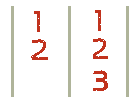
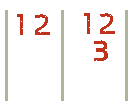
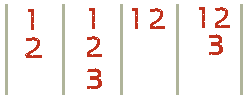
Korean is written into “blocks” that make up one syllable. One block always has exactly one syllable. The blocks are ALWAYS drawn in one of the following ways:

Important rules you need to know about these structures:

1. Number “2” is ALWAYS a vowel. Always always always always always.
2. Number “1, 3 (and sometimes 4) are ALWAYS consonants. Always.
3. Blocks containing a horizontally drawn vowel are always drawn in one of these two ways:

4. Blocks containing a vertically drawn vowel are always drawn in one of these two ways:

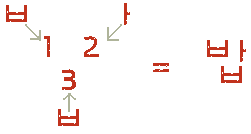
For example, if I want to write “bab”:

Step 1: Determine if the vowel is horizontal or vertical. a (ㅏ) is vertical, so we will use:

Step 2: Determine if the syllable ends in a consonant. Yes, it does. So we need to fill 1, 2, and 3, so we need to use:

Step 3: Place the starting letter “b (ㅂ)”, the middle letter “a (ㅏ)” and the ending letter “b (ㅂ)” into 1, 2, and 3 respectively.

ㄱ = k
ㅏ = a
ㄴ = n
ㅏ is vertically aligned, so if we make a syllable we would write: 간 (kan)

ㅂ = b
ㅓ = eo
ㅂ = b
ㅓ is vertically aligned, so if we make a syllable we would write: 법 (beob)

ㅈ = j
ㅜ = u
ㅜ is horizontally aligned, so if we make a syllable we would write: 주 (ju)

ㅎ = h
ㅗ = o
ㅗ is horizontally aligned, so if we make a syllable we would write: 호 (ho)

Read more…

Bi-Weekly Learning Journal #4 Korean II

For this week, we finished another episode of "Reply 1994" during our group meeting. For the individual meeting, we went over some basic greetings and sentences that we would use very frequently.

Saying hello

The first greeting to know is how to say ‘Hello’. The most common use of ‘hello’ is the polite annyeong haseyo (애 우리 하세 요). It’s respectful and can be used in any context. If speaking to a close friend or someone significantly younger, you might use the more informal annyeong (애영). But be careful – this is disrespectful to use when speaking to someone older or more senior. The most formal way of saying hello is annyeong hasimnikka (안녕하십니까), which is often used when someone addresses their boss or business partner. For foreigners, annyeong haseyo is always fine to use.

‘Pleased to meet you’ is another good greeting to know. In more formal contexts or when speaking with someone older, use mannaseo bangapseumnida (만나서 반갑습니다). Or, use bangapseumnida (반갑습니다) if the situation is more informal.

When entering a shop or hotel, you might hear staff say ‘Hwangyong hamnida (환영합니다)’, which means ‘Welcome’. Smile, nod your head or say ‘Annyeong haseyo’ in reply.

How are you?

To ask how someone is, one option is to say ‘Eotteohke jinaeseyo? (어떻게 지내세요?)’. The proper response 99% of the time is ‘Jaljinaeyo (잘지내요)’, which means ‘I’m fine’. You can also say ‘Jal jinaeseyo (잘 지내세요)’, which means either ‘How are you?’ if spoken as a question, or ‘Take care’ if said as a statement.

Did you eat?

This is a very important question to know, as Koreans use it like a greeting, similar to how ‘How are you?’ is used in English. Most of the time, the response is ‘Yes’ or ‘I’m fine’. The polite way to say ‘Have you eaten?’ is ‘shiksa hashutsuyo? (식사하셨어요?)’, to which the response is usually ‘ae haeseoyo (네 했어요)’ meaning, ‘Yes, I’ve eaten.’ You can also use the more informal ‘ap meogeoseoyo? (밥 먹었어요?)’, and the usual response is ‘nae meogeoseoyo (네 먹었어요).’

Saying thank you

Saying ‘Thank you’ in Korean can be a little confusing; there are a different ways to say it depending on who you are, who you’re talking to, what they’ve done, and so on. Luckily, you can usually get away with knowing just two ways: the more formal is kamsahamnida (감사합니다). This is appropriate to use in pretty much any context, although in a more informal setting, you might also hear ‘Gomo woyo (고마워요).’

Saying goodbye

The final thing to know is how to say ‘goodbye’. In Korean, this depends on whether you’re the one leaving. If you are, and the other person is staying (or has hosted you), you would say ‘Annyeonghi gyeseyo (안녕히 계세요)’, which translates to ‘Please stay well.’ If you’re the host, and you’re saying goodbye to someone else who is leaving, you would say ‘Annyeonghi gaseyo (안녕히 가세요)’, which means ‘Please go well’.

To say ‘goodbye’ more informally, when you’re the one leaving, use jal itsuh(잘 있어), which means ‘bye’, or ‘stay well’. If someone else is leaving, use Jal ga (잘 가), which means ‘go well’.

To say ‘Have a nice day’ in Korean, say, ‘Joheun halu doeseyo (좋은 하루 되세요)’. This is the only version, and it can be used whether you’re leaving or staying.

Read more…

Cultural Post #2 Korean II

After watching the "Reply" TV series, I find that the Korean drinking culture to be very interesting and after researching about it, I discover that there are some drinking etiquettes that are pretty similar to that in the Chinese drinking culture from what I know.

1. Senior should do the honour of pouring the first glass

Seniority is respected in Korea and this does not only apply to age, but also to the hierarchy within a company. When you’re out with your friends or colleagues, the most senior person in terms of age or position should be the one pouring the first glass of drink.

If you’re out spending the night with co-workers and your supervisor happens to be younger than you, he or she should do the honour of pouring out the first glass for everyone. 

Keep in mind that afterwards, the youngest of the group will have to take over and refill the empty glasses. 

2. Pour drinks with both hands

As a show of respect, Koreans generally use one hand to hold the bottle and place the other on their elbow or chest when pouring drinks. If you do find that the bottle is too big to be held with one hand, you can just use both hands. 

3. Receive the drinks with two hands

It’s only polite to reciprocate what you’ve received, be it amongst your friends or co-workers. When receiving drinks from someone older, hold your cup with both hands. However, if you’re the most senior person in the group, you can raise your glass with just one hand.

But Korean drinking rules become less strict when you’re out drinking with close friends, and it’s perfectly fine to use one hand when pouring or receiving drinks. 

Not sure if you and your drinking partner are close enough to bend the rules? Just use both hands – it’s better to be safe than sorry.

4. Clink your glass below your senior

When clinking glasses, position the rim of your glass a little lower than those of a higher status. Doing otherwise is impolite.

This rule can get confusing when you’re out drinking in a large group, but don’t worry. Just be sure to make it obvious that your cup is lower than most of the seniors, and you’re good to go.

As with the previous rule, this rule doesn’t apply to groups of close friends. And as the night progresses and people get drunker, these rules will get less strict.    

5. Turn away and cover your mouth when drinking

In Korea, it’s a practice to not face someone older straight on when you’re drinking. You’ll notice that people turn their heads either to the right or away from the table and have their left hands over their mouths as they drink. 

Again, you can drop these formalities and just down a shot if you’re out with your friends. 

6. Down the first glass in one go

Drinking in Korea is seen as a social activity where people bond over drinks. It’s a custom to down your first glass, be it a shot of soju or a glass of beer. But after that first drink, it’s ok to pace yourself after by taking small sips. 

7. Fill everyone’s cup but your own

As you can already tell, Koreans really value manners and respect for seniors. When you come across empty glasses on the table, promptly refill them starting from the most senior person. 

Do not refill your own glass as that’s seen as impolite. Instead, let others return the favour and pour one out for you.

Tip: At some point, heavier drinkers might start refilling their own cups. When that happens, quickly grab the bottle from the person and proceed to do the honour of pouring. This is the norm and you don’t have to worry that it might come off as you being rude.

8. Don’t fill the glass if it’s still partially filled

It may appear to be considerate to actively fill up people’s glasses, but you should only do so when they are entirely empty. According to Korean drinking rules, keeping their glasses half-filled is a way to say they want to take it slow. So as a rule of thumb, only offer to refill when there’s an empty cup on sight.

9. Know your limits and stop

Keep in mind that drinking is a social activity to get to know your colleagues or friends better. While it’s considered normal to let loose around your friends, there’s a certain line that you should never cross when drinking with your colleagues. It’s important to know your limits and drink responsibly – you don’t want to hide your face in embarrassment when you return to work. 

If you do get tipsy pretty easily, remember to keep your cup partially filled – it’s a sign you don’t want a refill.  

10. Polite ways to reject drinks

Although you have every right to say no, people may get pushy when it comes to drinks. And since Koreans drink to better relations, an outright refusal can be seen as you not wanting to be part of it. Here are some ways to politely decline drinks to avoid any misunderstanding:

  • I’m taking medication.
  • I’m the designated driver tonight.
  • I can’t drink because of my religion.
  • I have alcohol allergies.

11. Love shots are non-discriminatory

Love shots aren’t just a thing between couples or crushes in Korean drinking culture. You might be asked to do a love shot with either a friend or colleague too. All you’ve to do is simply hold up your cup and hook your arms around each other before taking a shot.

Read more…

Bi-Weekly Learning Journal #3 Korean II

For the third individual meeting, we were going to take the day off by simply chatting with each other about life and other things because the past month has been super busy for both me and my partner. We talked about the drama we watched during the group meeting-- about the plot, the historical background, and things that are interesting about the drama. For example, basketball was very popular in Korea during that time and basketball players were almost treated as celebrities. Also, from the first episode, I got to see that college students in Korea at that time were protesting the government, which I could never know if I didn't watch the drama. 

However, we still learned some Korean about how to encourage people.

파이팅! hwaiting

파이팅 hwaiting is borrowed from the English word “fighting”. However, this word does not necessarily mean to engage in the act of “fighting” rather it is a Konglish word that refers to fighting spirit and it is often used to wish good luck or to lift the team spirit by saying cheer up!

괜찮아 gwenchana [It’s okay]

This word is used to comfort someone who is feeling sad, depressed, or worried with a low pitch.

힘내 himne [Cheer up!]

This word is also used to cheer up someone who is feeling sad.

할 수 있어 hal su isseo [You can do it]

This phrase can be used to someone who is feeling doubtful about doing something or to simply encourage someone before they do something important – exams or sports

포기하지마 pogihajima [Don’t give up]

This phrase can be used to cheer on someone who is feeling discouraged, demotivated, and on the verge to give up on something.

정하지 마 geokjeonghaji ma [Don’t worry]

This phrase can be used when someone is worried about an issue.

자랑스러워 jarangseureoweo [I’m proud of you]

This phrase can be used to tell someone how you are proud of them or their achievements!

잘했어 jalhesseo [You nailed it]

This phrase is used when somebody did something exactly right or perfect.

haengbokaseyo [Please be happy]

We also looked at some motivational sentences just wanted to motivate ourselves and cheer ourselves up. 

It does not matter how slowly you go as long as you do not stop.

  •  멈추지 말고 계속 해나가기만 한다면 늦어도 상관없다.
  • Meomchuji malgo gyesok haenagagiman handamyeon neujeodo sanggwaneopda.

There are no short cuts to any place worth going.

  •  어디든 가치가 있는 곳으로 가려면 지름길은 없다.
  • Eodideun gachiga inneun goseuro garyeomyeon jireumgireun eopda.

You miss 100% of the shots you don’t take.

  • 치지 않은 공은 100% 골인되지 않는다.
  • Chiji aneun gongeun baekpeuro gorindoeji anneunda.

The best time to plant a tree was 20 years ago. The second best time is now.

  • 나무를 심는데 가장 좋았던 때는 20년 전이었다. 두 번째로 좋은 때는 지금이다.
  • Namureul simneunde gajang joatdeon ttaeneun isipnyeon jeonieotda. Du beonjjaero joeun ttaeneun jigeumida.

Happiness is not something ready-made. It comes from your own actions.

  • 행복은 이미 완성된 것이 아니라, 당신의 행동으로부터 오는 것이다.행복은 이미 완성된 것이 아니라, 당신의 행동으로부터 오는 것이다.
  • Haengbogeun imi wanseongdoen geosi anira, dangsinui haengdongeurobuteo oneun geosida.

I hope these words and quotes can help everyone who feels depressed or down whether in learning languages or worrying about the overwhelming workload. These definitely gave me strength and motivation. 

Read more…

Bi-Weekly Learning Journal #2 Korean II

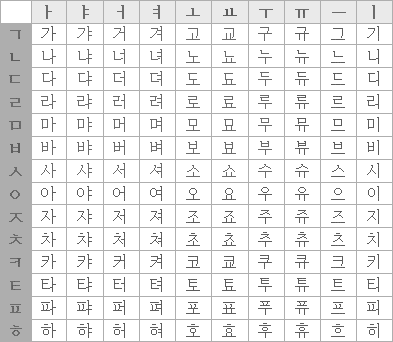
For the second class, we continued our discussion with numbers and had a little verbal test with respect to them. The test basically included all the concepts I learned with numbers (time, month, date, age, height, weight) and I was able to consolidate my knowledge. Then, we started to talk about the Korean Alphabet to consolidate the foundation for future study. The Korean alphabet consists of 14 letters for basic consonants and 10 letters for basic vowels. In addition, there are compound letters, each made up of two basic letters.

Korean Syllable Structure.

Indicated in the above table, the left column is the 14 consonants in Korean, and the top row includes the 10 vowels in Korean. It wasn't hard to memorize them as there are certain patterns that exist to help memorization. After that, we also talked about the structure and pronunciation of Korean syllables.

Syllables are always constructed beginning with a consonant, and then a vowel follows. The syllable could stop here, or there could be another vowel, or consonant, or both. The syllable begins with the initial consonant on the left or top, and the vowel(s) and other consonants follow to the right or bottom. For example:

where "k" is the consonant, and "ah" is the vowel. It is pronounced "Kah".

where "k" is the consonant, and "oh" is the vowel. It is pronounced "Koh".

When constructing syllables, always move from left to right and top to bottom. This is the same for reading. Sound out the initial consonant and then the following vowel(s), making it flow into the other ending consonant(s) if any. It's just like reading in English. Read left to right, sounding out each letter. Then move on to the next syllable. Words are separated by spaces, and syllables are right next to each other. Again, just like in English.

where "t" is the consonant, and "ah" is the vowel, followed by another consonant, "l". It is pronounced "Tahl".

where "t" is the consonant, and "oh" is the vowel, followed by another consonant, "l". It is pronounced "Tohl".

Also, we had our group meeting on Monday that was about watching a Korean drama called "Reply 1994". This television series follows the historically and culturally significant events that happened in the country between 1994 and the years that follow, including the emergence of seminal K-pop group Seo Taiji and Boys, the Sampoong Department Store collapse and the birth of the Korean Basketball League. This television series is very entertaining while containing deep meanings. It tells a lot about the historical events and cultural events from a very unique perspective: Set in 1994, six university students from various provincial areas of South Korea live together at a boarding house in Seoul, which is run by a couple with a daughter. I was able to see how people from the countryside were able to get used to the life in a big city like Seoul at that time. 

Read more…

Cultural Post #1 Korean II

For this cultural post, I want to talk about the history conveyed by the famous TV series, the "Reply" series as we recently watched "Reply 1994" together. 

South Korea in 1988, 1997, and 1994 was very different than it is now, and the show acts as a guide to many of South Korea’s recent historical triumphs and tragedies.

By interspersing important moments into the lives of the characters of each “Reply” series, the production team is able to make seemingly remote events seem very much alive and relatable. The oldest series so far, “Reply 1988” is still relatively recent in the sense of history, but feels very removed thanks to the fast-paced world that we live in.

But the first two episodes, while hilarity-inducing thanks to the late 1980’s fashions and VHS tapes, don’t feel so old. The anticipation of the 1988 Olympics feels very much alive and high school life isn’t so different, even if the teenagers have to do without being glued to their smartphones.

Similarly, the political and financial struggles of South Korea are also portrayed in ways that are relatable, and yes, informative. The political reality of the day — the first time that South Korea had a true democratically elected leader since the 1960’s– is alluded to multiple times by characters commenting on college-age Sung Bo Ra going to protests.

Thanks to captivating storytelling, someone who has no knowledge of this period in South Korean history is drawn into the period tvN series’ world as if it is current. The previous series, “Reply 1997” and “Reply 1994” similarly bring to light events that are both familiar and historical to South Korean audiences (and likely unknown to many international fans of the series).

In “Reply 1994,” one of South Korea’s most disheartening years was brought to light. While the country is now one of the wealthiest in the world, South Korea was wartorn in the 50’s, and only intense pushes for progress have helped the country get to where it is today. But in “1994,” the feelings of South Korean dismay following the International Monetary Fund (IFC) crises and the collapse of Sampoong Department Store were brought to the surface, evoking sympathy and renewed concern for the events that occurred nearly a decade before the show in 2013. (Alternatively, the show also renewed interest in South Korea’s 1994 success in soccer with their Red Devils taking to the streets of Seoul).

If “1988” is showing an exuberant country dealing with modernization and democracy and “1994” focused on the changing world of modern-day South Korea, “1997,” the first series which aired in 2012, was the most familiar to many viewers but at the same time still introduced “retro” elements of K-pop, video games, cell phones, and many of the popular fashion brands of the day interspersed with historical events.

As each series presents its story, it showcases a way of life that is familiar to us but disappeared with the fast-paced world hardly blinking an eye. The obsession with “20 Things 90’s Kids Know”-type lists is alive and well, and “Reply” takes it to a new format, educating the viewers of 2015 about all the things we’ve forgotten about the past few decades.

Melodrama and comedy make “Reply” loveable, but it’s also a way to remind the audience of the struggles and successes that South Korea has faced over the years. These elements of nostalgia that make “Reply” popular enough to warrant not one but three seasons, and hopefully more in the future

Read more…

Bi-Weekly Learning Journal #1 Korean II

For the first class of this semester, my fellow student Valentina, our language partner Jannette and I met for the first time. We decided to hold three meetings including one group meeting and two individual meetings based on our different levels. 

Sino-Korean System:

Native Korean System:

For the individual meeting, I was able to regain the knowledge I learned from last semester-- numbers. There are two sets of numbers in Korean: the native Korean system and the Sino-Korean system. The native numbers are used for numbers of items (1-99) and age, while the Sino-Korean system is based on Chinese numbers and are used for dates, money, addresses, phone numbers, and numbers above 100. For this class, I consolidated my knowledge about recognizing and pronouncing numbers in both systems from 1 to 10. Moreover, I learned how to pronounce 11-100. To form double-digit numbers using Sino-Korean numbers, you just have to combine the number words from 1 to 10. For example:

  • 20 – 이십
  • 21 – 이십일

To make twenty, we use the words that refer to 2 (이) and 10 (십), and to make 21, we add the word that refers to 1 (일) to 20. The same logic applies to other double-digit numbers in the Sino-Korean number system. 

On the other hand, this logic doesn't apply to the formation of double-digit numbers in the Native Korean system. Similar to English numbers, the Native-Korean number system has specific words for double-digit numbers that end in zero, and these are numbers like 20, 30, 40, and so on.

Both number systems have specific uses in Korean, and it’s important that the number systems are used appropriately.

Sino Korean numbers are used for the following purposes (the ones that were covered in our class):

  • To say the date:
    • 일 (January 1st)
  • To count the days:
    • 일,
  • To count the years:
    • 년,
  • To count the months:
    • 개월, 개월

Native Korean numbers, on the other hand, are primarily used to count things. In Korean, when you count things, you have to use a specific word to count different nouns. These counting words are called counters.

The most common counter word is

Native Korean numbers, on the other hand, are primarily used to count things. In Korean, when you count things, you have to use a specific word to count different nouns. These counting words are called counters.

The most common counter word is 개 (ge), which we use to count most inanimate objects. However, there are many different counters in Korean. The one that was covered in our class was Age – 살 (sal). 

However, there are also some exceptions where both systems are used at the same time. 

One exception to the rule we covered is telling the time. When we tell the time in Korean, we actually use both Sino-Korean numbers and native-Korean numbers. 시 means ‘hour’, and to indicate what the hour is, we use native-Korean numbers in front of 시. 분 means ‘minute’, and to indicate how many minutes past the hour, we use Sino-Korean numbers in front of 분. For example:

  • 1:10 –
  • 5:20 – 다섯이십
  • 6:40 – 여섯사십
  • 10:05 –
Read more…

Reflection Paper #2

For me, I really enjoy learning language with others. In this way, all of us could encourage one another in learning languages. Also, I really love the atmosphere in classes as my classmates would draw examples from different languages when answering questions related to grammar, phonology, and sentence structure. It is very insightful and interesting to know the differences between languages. Also, from the classes, I remembered the video that was about a tribe in Africa and their different perspective in reading colors. I really love to see this kind of experiences as it relates to how human brains and the surrounding could shape and change your behavior and perception to the world. 

As for my target language, I especially fond of learning about the culture by watching movies ("Parasite"). In this way, it's good for me to cultivate a good language sense and also learn phrases and slangs that I may not be able to learn in formal language study. However, after a semester of learning, I still have some difficulties. These difficulties mainly relate to different grammatical rules. For example, the counting system, the age system, and the combination of the counting system and the age system. I really couldn't understand and take them in at first. However, after rounds and rounds of practices and examples, I finally managed to understand them and get used to their existence since they are super different from Chinese and English that I know. 

In the future, I would continue learning different languages. Because I find it very intriguing to compare different languages with respect to their grammars and other elements of languages. After all, there is no ending in this path of language learning and that each learning experience is very meaningful and valuable.

Read more…

Discussion Post #9

안녕하세요, 저는 Raymond 입니다. 한국어를 배우는 것이 좋습니다. 도전해야 할 언어가 있지만 언어를 배우는 것을 좋아합니다. 반 친구들
과 만나서 함께하게되어 기쁩니다. 여러분 모두와 함께 배울 수있는 훌륭한 학습 기 회였습 니 다.
Hi my name is Raymond. It's nice to be given a chance to learn Korean. I love learning languages even though there are
many challenges I have to face.. It's nice to meet with my classmates and get along with them. It's been a great learning
opportunity for me to know all of you!

I started to write in Korean since the beginning of the semester. Through these exercises, I've honed my knowledge and
cultivated the habit of writing in Korean and the wya of thinking in Korean. However, there were no formal exercise since
a formal exercise could, from my perspective, make the learning process more boring. For example, I would write the
current time on a paper using Korean when I want to know the time. Another example is writing a short paragraph in
Korean, documenting what interesting things had happened everyday. In this way, I managed to find the difference
between a simple sentence and a complex one. A simple sentence consists of only one clause while a compound one
consists of two or more independent clauses. And when I try to write a long sentence (complex sentence) in Korean,
the example thought process of mine is:

I came to Korea to practice Korean and meet friends

breaks down into 3 sentences:

  1. I came to Korea (past)

  2. I practise Korean (future)

  3. I meet friends (future)

The three nouns in this sentence: Korea, Korean, friends

So I concluded that sentence 2 & 3 should fit somewhere between 오다 and 한국. I also read the sentence as "I came to Korea in order to practice Korean and meet friends". From my understanding, (으)러 can be used as it implies movement to go do something. I could also make one of the verbs 연습하다 or 만나다 into an adjective since they both are action verbs and I could use that to describe one of the nouns above.


Read more…

Discussion Post #8

In linguistics, language dies when the last speaker of the language is lost, including secondary speakers. As the article indicates, there are many linguists attempt to save certain language such as the language, Siletz Dee-ni, mentioned in the article. Additionally, there are also students who are learning this language. Therefore, I was wondering how could language goes into extinction with so these many actions have been done to preserve it? I went to do some researches online and some factors including war or disaster. However, most languages die out gradually as successive generations of speakers become bilingual and then begin to lose proficiency in their traditional languages. This is surprising.

But there are definitely many means that could be used to save and preserve endangered languages. As I mentioned above, learning the language could prevent the language from extinction since there are more speakers who understand the structure of the language throughly. Another method, as mentioned in the article, is to create dictionaries for endangered languages. In the article, Bud Lane, who is a tribe member, is working on the online talking dictionary for Siletz Dee-ni. From my perspectives, one of the ways that could potentially protect and document linguistic diversity is through recording. Recording the way native speakers talk, the vocabulary, and the grammar and so on. Even though this method would require a lot of labor work. 

As far as we know, there are still many languages die out every day with nobody knowing. Therefore, it is important to preserve the ones that we are aware of and try to find other languages that remain unnoticed.

Read more…

Discussion Post #7

For me, I'd say a language is a silk covering the culture underneath. The reason why I think of this metaphor is because a language can always show you some of its culture's elements and traditions. Take Korean, my target language, as an example. There are different forms of languages in Korean, which includes honorifics, formal, and informal languages. The appearance of honorifics indicates a sense of respect and politeness of younger people to elderly people and people would have to follow the rules in order to not be regarded as rude and reckless. 

Since communicative competence has several components and aspects, I would prefer to learn based on social and cultural aspects rather than straight into grammars. Because learning based on experiencing can more easily develop my interest and curiosity in the target language and as mentioned above, culture also has some implications on the language. Therefore, I could learn a language with curiosity. However, even though my learning plan was mainly based on learning the language in a social context and situation, throughout the semester, I've also been learning grammar, sentence structures and words structures. Therefore, I would, in the future, improve my competence by learning grammar and then applying the knowledge in a real-life settings. For example, when I finished learning tenses of verbs, I could use them with my partner in a created setting such as in a restaurant or a meeting.

Read more…

Discussion Post #10

If I'm granted a research fund in conducting linguistic study, I would want to start by analyzing the structural components in Korean including morphemes, syntax, words and sentence structures and so on. The reason why is that after analyzing and documenting the traits of elements of Korean, the foundation is laid. The ultimate goal of the study is to learn the origin of this language because I want to know how, in the past, did people, more specifically human brains, developed this language. As i mentioned in my last learning journal, I find this subject matter really intriguing while it still remains a mystery. Moreover, I want to study the variations in Korean, meaning that I want to learn more about Korean dialects as well and how they develop and different from the "official Korean." 

Additionally, I would want to compare different languages. For example, I want to compare Korean with Chinese because they both have similarities and differences. The differences include different sentence structure and grammar while the similarities come from having the counting system from Chinese. Chinese has 4 tones plus a neutral tone. Korean has a phonetic script with alphabets while Chinese has a logographic script where every word is written as one or more  Chinese characters, thus making it more complex to learn to read as well as write. If I'm able to accomplish this task, our understanding of language, and more importantly human brain, will be improved. 

Read more…

Culture Post #4

Today I am going to talk about Korean’s traditional clothes, “Hanbok”. Korean clothing was mainly influenced by Chinese Tang dynasty clothing. This is recorded in the history documents: " clothing and daily life, same as China." Silla had very close contact with the Tang dynasty, and the clothing characteristics were almost the same as the clothing of the tang dynasty. The development of Hanbok's characteristics began in the middle of the Lee's Korea. Since then, Korean clothing, especially women's clothing, has gradually developed into high-waisted and long skirt, and the difference with Chinese clothing has gradually increased. However, the court dress and formal attire still have major Chinese characteristic. During the Korean war (1950-53), western clothing entered South Korea. By the 1960s and 1970s, as the pace of life and work accelerated, people found Korean clothing too cumbersome and inconvenient to wear, and the number of Hanbok users was greatly reduced. Nowadays, Hanbok enthusiasts have been actively promoting Hanbok and have revived it with designs that are easy to wear.

The line of Hanbok holds the beauty of curve and straight line concurrently. For example, the short jacket of women's Hanbok shows perfect elegance. Men have trousers, jacket and vest which show a unique taste. White is the basic color, but material and color depends on the season and status. The beauty of Hanbok clothing can be presented by the appearance of line, the color of the fabric and the changes in decoration. The jacket that emphasizes female neck downy line, inside and outside edge v-shaped collar or natural downy cuff curve, highlights gentle feeling. Korean clothing can also hide the shortcoming of body shape, makes short people look taller, skinny people look healthier. Korean clothing can be classified according to identity, function, gender, age, purpose and material. According to the usage purpose, Hanbok is divided into wedding Hanbok, festival Hanbok, Birth Hanbok and so on. The hanbok at a traditional wedding is more ornate than usual. At the wedding, the groom wears trousers, a vest, a jacket with a knot, a gauze hat and a crown, and wooden boots. The bride wore a red dress and a yellow blouse and wore a hairpin with a prefix and streamer on it. In festivals like Spring Festival, older people wear tradition Hanbok and children wear colorful tops and hanbok to celebrate. Nowadays, the everyday Hanbok gains popularity. Since traditional Korean clothing is only worn on special days because of its complexity, the simple and convenient every hanbok emerged and also received popularity among tourists.

An example of presenting the beauty of Hanbok to the world is the 2005 Asia-Pacific Economic Cooperation (APEC) Leaders' Summit in Busan, South Korea. The color and design of each piece of Korean Hanbok are selected according to the theory of Yin and Yang and the five elements respectively, each representing a different meaning. For example, yellow, green, red, black and white represent the five directions of east, south, west, north and middle, as well as the five elements of gold, wood, water, fire and earth. For the design, the makers chose pine, bamboo, cloud and peony. The Korean Hanbok has is unique culture and attraction that are now famous all over the world.

Read more…

Bi-Weekly Learning Journal #8

For this last learning journal, I didn't really have any new knowledge and insights learned in class since me and my partner skipped one class at the very end of the spring break. Therefore, I just wanted to talk about things that I learned throughout the semester with Dr. Marsh-Soloway and with all my classmates. 

First of all, what is language? The only definition I knew at the very beginning of this semester was that language is used for communication between different individuals. However, right now, when I think of languages, my brain is filled with phonology, morphology, grammar and phonetics. Phonology deals with interpretations of speech sound and phoneme which is the smallest unit of sound. Morphology, from what I learned, is the study of words and relationships between different words. Grammar, obviously, the whole structure and system of languages of any kind. Phonetics, comparing with phonology is the production and perception of speech sounds in any language and it deals with phone. 

I never knew some of the proper nouns before this semester and I'm surprised that I managed to memorize these even though I didn't regard them as interesting in the first place. And I was always wondering, how languages developed and how did they emerge a very long time ago when the first group of people tried to communicate with each other. I know we've covered language trees and language families before. But I still wonder, how could each language differ from each other hugely but has many things in common at the same time? This might sound a little abstract and what I wanted to say is that we could tell almost simultaneously if someone is speaking another language because of different phonetics. But, how could some languages, though developed separately have similar or even the same structure (grammar for instance)? 

Throughout the semester, after all these things I learned, this knowledge always surprised me by telling me how marvelous the brain is. Everything eventually ties to the study of brain while it's not fully understood by people even though everyone has a brain. I always wonder if we can, in the future, actually accomplish this task of understanding our brains because it's visible while intangible at the same time. Languages are the same. Every one speaks one language while no one actually understand it. 

We learned words, meanings of words, sounds of words, forms of words, compositions of words and grammar rules and so on in this semester. We also learned about how people produce sounds using teeth, and lips and so on.(I'm sorry but I couldn't really remember the proper nouns for human parts that produce sounds). However, the development of everything, eventually, is from the brain which is the most incomprehensible and complex human parts to understand and study. And again, I always wonder if people in the modern time could actually develop a new language that could be used even between a very small groups of people just like what we're using for speaking right now. And if not, is it because we lose the ability to do so or something else? 

Read more…

Bi-Weekly Learning Journal #7

For the last class, we switched gears and actually started to communicate with each other in Korean for the first time. We asked about classes:

  • 수업 쉬워요?
    • Is the class easy?
  • 어려워요!
    • It’s hard!

We asked about plans and schedules:

  • 안녕하세요, 경미 씨. 성수입니다.
    • Hello, this is Yongjun.
  • 안녕하세요, 성수 씨.
    • Hello Yongjun.
  • 지금 12시 15분입니다. 우리 극장에 몇 시에 갑니까?
    • It’s 12:15 now. What time are we going to the theater?
  • 3시 30분에 갑니다.
    • We’re going at 3:30.

We also asked about plans and rejections:

  • 미나 씨는 내일 계획이 있습니까?
    • Do you have plans tomorrow?
  • 아니오. 계획이 없습니다.
    • No, I don’t have any plans.
  • 그럼 내일 남대문에 갑시다.
    • Then let’s go to Namdaemun tomorrow.
  • 음… 잘 모릅니다.
    • Hmm… I don’t know.

Finally, we learned some restaurant dialogues:

Waiter : Good Evening. How many people?
안녕하세요 몇 분이신가요?
( an nyung ha se yo. myut boon ee shin ga yo? )

Customer : two
두 명입니다.
( doo myung im ni da )

Waiter : Smoking or non-smoking?
흡연석, 금연석 중 어느 것을 원하시나요?
( heub yun suk gwa geum yun suk joong uh neu gu seul won ha shi na yo? )

Customer : Non-smoking, please
금연석으로 해 주세요
( geum yun suk eu lo hae joo se yo )

Waiter : This way, please
이쪽으로 오세요
( ee jjok eu lo oh se yo )

Here is the menu.
여기 메뉴가 있습니다
( yu gi me nyoo ga it seum ni da )

Customer : What do you recommend?
어느 것을 추천하시나요?
( uh neu gu seul choo chun ha shi na yo? )

Waiter : Boogogi and Galbi are very tasty for barbeque.
불고기나 갈비가 바베큐로 좋습니다
( bool go gi na gal bi ga ba be kyoo lo jot seum ni da )

I also like to recommend Bibimbab.
그리고 비빔밥도 추천드립니다.
( geu li go bi bim bab do choo chun deu lim ni da )

Customer : We will try Bibimbab.
비빔밥으로 할께요.
( bi bim bab eu lo hal gge yo )

Could you make it less spicy?
덜 맵게 해 주실 수 있나요?
( dul maeb ge hae joo shil soo it na yo? )

Waiter : Yes. I will bring spicy paste separately.
네, 고추장을 따로 가져 오겠습니다.
( ne, go choo jang eul dda lo ga ju oh get seum ni da )

Waiter : How is everything?
어떠신가요?
( uh ddu shin ga yo? )

Customer : It taste very good.. Could I have more cold water please?
매우 맛있습니다. 냉수 좀 더 주세요
( mae oo mat it seum ni da. naeng soo jom du joo se yo ).

Waiter : Sure. Here it is.
네, 여기 있습니다.
( ne, yu gi it seum ni a )

Waiter : What would you like to have for dessert?
디저트로 무엇을 드시겠습니까?
( dee ju teu lo moo ut seul deu shi get seum ni gga? )

Customer : What do you have?
어떤 게 있나요?
( uh ddun ge it na yo? )

Waiter : Ice cream and Tea.
아이스크림과 차가 있습니다.
( ah ee seu keu lim gwa cha ga it seum ni da )

Customer: We will take Ice cream. What flavor do you have?
아이스크림으로 하겠습니다. 어떤 맛이 있나요?
( ah ee seu keu lim eu lo ha get seum ni da. uh ddun mat shi it na yo? )

Waiter : We have green tea or vanilla.
녹차와 바닐라가 있습니다
( nok cha wa ba nil la ga it seum ni da )

Customer : Green tea ice cream, please.
녹차 아이스크림으로 주세요.
( nok cha ah ee seu keu lime u lo joo se yo )

Waiter : Here is your ice cream.
여기 있습니다
( yu gi it seum ni da )

Customer : Can we have a bill?
계산서를 주시겠어요?
( gye san su leul joo shi get ssu yo? )

Waiter : Here it is. Thank you.
여기 있습니다  감사합니다
( yu gi it seum ni da. gam sa ham ni da )

Read more…