Chester Hunter's Posts (22)

Sort by

Final reflection

I think this semester I learned a lot about efficiently using time and resources to hit important milestones within a learning environment. In classes like high school Spanish, where there is plenty of time and entire periods are devoted to just the one subject, it is very easy to get distracted and not try very hard. But when teaching yourself, or studying without a very defined curriculum, it is important to practice mental discipline and make the time for practice by yourself. This was difficult for me to get accustomed to as focus isn't really something that comes naturally.

Learning from a somewhat unqualified peer rather than an actual teacher was also very interesting. In some ways it made understanding certain concepts much easier, since the subject matter/examples always hit closer to home rather than feeling vaguely out of touch and uninteresting (like in high school Spanish.) But in other ways it made things much more difficult, as my language partner had a lot of trouble describing certain concepts in way that would make sense to English speakers.  One of the hardest parts was understanding words like "this" and "that" in Hebrew, since there is no easy definition you can give for these kind of words. Similar to how "that" in English has two meanings, as an identifier and as a part of speech (I know "that" he is interesting.) Hebrew also has multiple meanings for these words, but my partner was unable to explain in English, rather she only used examples and over time through making mistake after mistake I began to understand when to use them. 

One of the things that I think I have learned about myself, and how I process language, is experiential based learning works better for me personally than memorizing grammar rules. I previously discovered this in Chinese and Russian. In Chinese the word 了 doesn't really have an English meaning, but I know when to use it just instinctively. Maybe a couple years ago I could explain the meaning but not anymore. In Russian, on tests where we have to list conjugation patterns (govoryu, goverishb, etc) it was always very difficult for me to list out the full declension, even though in practice I could always pick the right ending. I think this is generally a good language acquisition pattern, because it is most similar to how native speakers (I assume) process their own languages. I know for sure that with English, I don't know why I say things the way I do, but I get it right through feeling it. We touched on this in class with the adjective order example. That rule was not mentioned once in any curriculum I took, but I instinctively knew it. In Hebrew I have seen this most with declensions similar to Russian, but also eventually with the small words like this and that. I began to use the correct one without understanding any real rule behind it. 

Overall, I think even without the Hebrew I gained this class was a very valuable experience. I learned a lot about the history behind languages how they connect and differ throughout the world. And I feel much more comfortable in Hebrew, so when I hopefully go back next year I will be able to impress my language partner in person!
Read more…

Learning blog 6

This week we focused on improving fluency and understanding basic nikkud. Nikkud are diacritical marks that denote how a vowel is supposed to be pronounced. א this letter is "a" but as we know in english, there are many different ways to say the vowel. In english there are so many exceptions that you really just have to know the word to know exactly how it is pronounced, but Hebrew is more regular and so nikkud is a system to allow people to confidently pronounce unfamiliar words correctly.

Originally I had discussed with my language partner about if I really wanted to learn nikkud or not. My reasoning was that it isn't really a natural way to learn it, since it is tailored to foreigners who are learning hebrew as a second language. I figured that there wasn't really much of a point, because if I read something in Hebrew, unless its a religious text or a text specifically formatted for hebrew learners, it probably wouldn't have nikkud at all, so why learn something that I won't really use that often? But my language partner said that I should probably learn it anyway, since the idea is to have good pronunciation when you look up a new word, like how in English dictionaries there are phonetic markings that tell you how a word is pronounced (although truth be told I have never used these.) So I decided to at least familiarize myself with the most basic nikkud. 

Read more…

Cultural artifact #3

For this cultural artifact, I read some articles about cultural differences between Israel and the US, discussed my findings with my language partner, and thought about my own experiences abroad and in my home country. One of the things that jumped out at me was how in Israel, prices on things are usually negotiable. Some other countries do this to an extent, especially in Asia, where it isn't uncommon to barter and try to talk down prices, but in Israel, things are negotiable that to me don't seem like they should be. For instance, phone bills through national carriers are often priced way higher than what the companies actually expect you to pay. Even if they are surprised if you don't try and talk down the price, they will happily take your extra money. My friend told me that she has never payed a listed price for a haircut, which I thought was especially funny, considering that I would be terrified of making the barber angry (since she can really mess me up if she wants. In the US and especially in smaller cities and in the South even questioning a listed price for something would be perceived as absurdly rude, unless in a very few specific circumstances, like a craigslist tractor purchase or something. 

Another thing I noticed is the relationship with money. I know that some foreigners I have met think that Americans have a slightly weird way of thinking about personal finances, i.e. never speaking about or inquiring after others salaries, always splitting a check. One thing I have never received or given as a present is straight cash, because my parents always told me it was rude. The closest thing I could get is a gift card, which still seems a little bit impersonal. In Israel, the relationship is the exact opposite. At weddings it is considered rude to ask for anything BUT money. Some married couples will have an ATM at the ceremony so people can drop off cash right there. I think it is interesting how both these differences revolve around money, and how there are so many stereotypes, sometimes true and sometimes not in my experience with my family and my friends, regarding Jewish people and money. It reinforces for me the idea that stereotypes are not usually simply untrue, but instead built off of cultural unfamiliarity, 

Read more…

discussion post # 10

I think I would like to focus less on the technical side of Hebrew linguistics, since I am sure that has been done to death and by people better at linguistics than me, but rather I would focus on the more cultural and political side of why, and eventually exactly how, Hebrew was simplified from a very arcane ancient semitic language to the extremely simplified and straightforward version taught today. Some of the examples that I could research from things I have already learned in Hebrew would be easily compared to a more complicated language in the same language family, such as MSA. MSA has a total of 13 different verb conjugations, while Hebrew only has 4 (I think).

Broader grammar in Hebrew could also be an interesting area, as especially in recent years, the use of the internet and having large immigrant populations speak broken Hebrew has changed the acceptable and linguistically intelligible word order to become much more fluid. In religious texts, there is a very strict word order than can't be changed for any reason, but nowadays you can switch words around and people will understand without issue. 

Read more…

discussion post #9

So far the only writing I have done is typing on my phone in texts to my language partner. It isn't easy to adjust to Hebrew script as a writing system mainly because vowels aren't written and there are some letters that are basically the same as other ones, just written differently. Luckily, because of the lack of vowels, even words spelled wrong are usually intelligible, since the brain auto corrects the word to what it thinks it should be. This isn't really as possible in languages like Chinese where if you write the word wrong the whole meaning can go out the window. 

One of the tougher things is getting used to different key positions for foreign keyboards. Chinese doesn't have this problem at all, since you essentially type using a qwerty keyboard that gets switched to Chinese once the word is finished, but for languages like Russian, Arabic, and of course Hebrew, it can take forever to find the letter that you need since we have so much muscle memory pushing us to one corner of the screen. Of course, this is even worse on a laptop, since you can't see which key you are hitting as you hit - this makes phones much better tools for learning the keyboard. So one exercise I do is just to grab a nonsense string of letters and try and type it out as fast as I can. This really helps in speeding up typing, which I think is far more important in this day and age than handwriting. 

Read more…

learning blog 5

This week was mostly about new vocab and learning how letters function. Hebrew can be tough since Semitic alphabets work quite differently than roman ones. One of the big differences that I have noticed in both arabic and hebrew is that letters can be written differently depending on where they are in the word. In arabic, most letters have 4 different ways of writing them, since all letters conjoin in some way to letters around them. It makes writing in Arabic like writing very complicated cursive. Hebrew is much simpler, but has still has a couple letters like this, such as the letter nun (n). There is a variant of the letter called nun sofit, or final nun, which is only used when a word is ended with a nun. I am curious why this holdover from ancient semitic languages was kept in modern hebrew - it doesn't have any real use that I or Israelis can figure out since Hebrew is never conjoined.

Another interesting similarity is the letter ayin. In arabic this is a very common consonant and learning to pronounce it correctly is very important in terms of fluency. In hebrew this letter still exists, but it is always silent, with no exceptions that my language partner could think of. Again, why keep it? I think part of the reason is that when Hebrew was revived, there was a huge lack of vocabulary since the language had been stagnant for so long, so the government resorted to using ancient words to describe new concepts. But these words could only be written with ayin, so they decided it was easier to keep the letter rather than change the vocabulary. I am not certain about this though, so I think I will do more research/ ask someone who knows more about ancient hebrew. 

Read more…

discussion post #8

I think the idea that cultural groups can be complicit in the extinction of languages is interesting. Yiddish isn't quite dead yet, but it is certainly heading that way, which is a shame especially since it influenced English so heavily. I didn't realize growing up how many words I used and heard in normal English were just yiddish words. I was especially surprised when at home and hearing my dad (from Brooklyn) talk to me I realized that a ton of the words were not English, but I understood them by virtue of growing up with them. I had always thought of it as normal english, but then when I asked my friends if they could understand, none of them could. 

One thing that makes me hopeful about the future of language preservation is current technology. With how powerful computers and the internet are at the moment, I find it hard to believe that a current language could be completely lost short of a global catastrophe. We live in a really fortunate time, with the breadth of human knowledge available at no cost to us. Thinking about ancient civilizations that have been totally forgotten makes me very grateful to have been born in this millennium.

Read more…

Cultural artifact #2

For this post I wanted to talk a little about the paradox that is multiculturalism in Israel, and my experiences with it while I traveled there last summer. Israel as a country was created for a very explicit reason - essentially to create a home for the Jewish people. In theory, the mainly Ashkenazi (European Jewish) founders of Israel wanted to create what would be considered by today's standards an ethnostate - one country, one religion, one people. But this didn't really work, perhaps because after the holocaust there were far too few Ashkenazi Jews left to populate Israel. What actually happened was the creation of an although majority Jewish, extremely pluralistic and multicultural nation that encompasses a massive range of different people and cultural identities. Immigration was the main factor in this, with large swaths of people coming from Ethiopia, America, and the former USSR. Maybe more relevantly to this class, multilingualism is high as well, with a huge amount of Israelis speaking English or Russian as an auxiliary language to Hebrew - there is enough Russian to have prompted Putin to call Israel a Russian speaking country. 

My personal experience was even more extreme. In my group, out of 5 soldiers, two spoke Russian as a first language, and one spoke English with no accent having lived in the states for a long time. Walking around in Jerusalem we went into stores that had absolutely no Hebrew spoken - only Russian/English/Amharic/Arabic. It reminded me a lot of America - in San Francisco I spent a lot of time in Japantown (called Nihonmachi I believe by the residents) and it was always a lot of fun to be able to travel in one city and see an area that felt almost like another country. The same things is possible in modern Israel. So even though by it's founders standards Israel could be considered a failed state, something else has grown in it's place - and it is far more fascinating, in my opinion. 

Read more…

discussion post #7

So far I think things are going according to plan, especially in terms of pronunciation and fluidity. Oftentimes during sessions I will be able to respond and express my feelings on something through Hebrew instead of English, for instance if my partner uses a word that I haven't learned I will first say "I don't know that word' in Hebrew. So far I haven't said anything that hasn't been understood so I take that to be a good metric for analyzing basic pronunciation and accent. Since I have learned the alefbet and studied many of the words for common foods in Israel such as bread and olives already, I think I have hit my goal of being able to read basic menus, although looking back I think these kinds of words would help more in a grocery store setting than a restaurant one, since I can't imagine ordering straight olives and bread in a restaurant on the regular. I have used the radiogarden.com website a couple times to listen to Hebrew while doing other things a couple of times, but have found Netflix to be a better resource for this as I can get the translation of what exactly people are saying much easier, and Israeli radio plays way too much Taylor Swift. 

As for the relationship between language and culture, I think both these things support and take from each other. Language comes from culture, and vice versa, culture comes from language. I think neither can be built in isolation, whether isolated from each other or more literally by a human isolated from the world. 

Read more…

learning blog 4

The past two weeks have focused on grammatical situations involving accusative and nominative sentences. Ironically, I have no idea what those two things mean in English, and know them purely by examples given in Russian, which made it tough to describe to my language partner what exactly I was interested in learning. We learned new words such as shey, ze, ha, et, which all seem to mean this/that/definition depending on the context. My partner struggled a lot with finding an english counterpart to each of these words, and I don't blame her. One of the most interesting things that I have found about learning a foreign language is how much it shows you how little you understand your mother tongue. I think learning a language definitely has a progression from perfect understanding of what you are studying to just knowing how to say things without thinking about it, like how a native speaker learns. I remember a couple years ago I could probably explain what exactly the chinese word 了 means but know I would really have to think hard about how to explain it, instead I just use it when it sounds right. Same with languages that have case/gender endings like Russian. The progression from actively thinking about a verb's declension to just saying what you think is right is really important and I think defines what is almost paradoxically simultaneous progression and regression.

This weekend I plan on starting to learn the Hebrew Aleph-bet. The reason I waited so long was I didn't want to confuse it with the arabic alphabet that I was learning at the beginning of the semester. Also it isn't something that is as important to me as proper pronunciation and fluidity, and not something that I really need to practice with my language partner. I anticipate it being somewhere in the middle in terms of difficulty between cyrillic and arabic. 

Read more…

discussion post #6

Hebrew is part of the semitic language family, so it shares many similarities with the most often spoken modern semitic language, arabic. One of the biggest similarities I have noticed while studying both languages is how the basic posessive works. In Hebrew, you put the word "sheli" after the object that you possess, but occasionally it can be shortened to just "i" as in "achi:" ach (bro) and i (of mine). Arabic works similarly , by placing a "i" after the possessed object, such as in ach which is brother just like in hebrew. Speaking of brothers, familal nouns tend to be the most ancient in any language, so it makes sense that hebrew and arabic share many of their familial words, such as brother, sister, father. Going back to the modern era, hebrew takes quite a few slang loanwords from arabic, although I am not sure whether this is truly because of the shared linguistic family tree or more a product of geopolitics in the region. Words like yallah (lets go) and majnun (crazy) are both arabic words but used constantly in Israel, in fact it would sound kind of weird to say the hebrew versions of those words.

Read more…

Discussion post #5

Israelis tend to be blunt, brash, and quick tempered. Obviously that is a generalization, but it is something most people notice when speaking and getting to know them. At this stage I think it would be hard to answer the question of whether this has anything to do with their language. It is at least funny that Hebrew as a modern spoken language was made in a hurry, and tends to be a simple, rapid manner of communication rather than a language like Japanese where you have to say a lot to mean a little. Hebrew goes straight to the point, and does away with complicated conjugations or grammatical rules in favor of guttural pronunciation and a plethora of swear words. One funny example of Israeli bluntness can be heard on weekends when my language partner is at her house. During a break, sometimes I will her yell at her mother downstairs to get her a glass of water. The sentence (and sentiment) could be translated something like "mom! water now!" In response I will hear similar yelling coming from downstairs but I can't quite make that out. Of course, a sentence like that sounds pretty rude to American ears, but when asked about it, she just said she thinks it is normal. In her words, Israelis in general don't see the point of using words like please and thank you since getting what you need is more important than superficial manners. As such a young country, that has fought an existential war almost every single decade since it's inception, this cultural facet makes me wonder if the overwhelming national sense of urgency and emergency has contributed to this linguistic and cultural mannerism.

Read more…

learning blog 3

These past meetings my study of Hebrew has moved on from useful phrases and pronunciation and instead focused on basic grammar and conjugations such as conjugating adjectives and the possessive "my." These two systems seem to function as extremely simplified versions of arabic - instead of arabic's 12 or 13 conjugations of verbs, I can't quite remember which, hebrew only really has 4: male singular, female singular, many masculine, and many female. Hebrew is the first language I have studied where verb conjugations don't really extend to cover every single pronoun - for example, there are different words for you male, you female, but these are the same conjugations as he and she, since in the end you are only referring to one male or one female. Possessives are a bit more complicated, with Hebrew adding two extra forms in he and hers to bring the total to 6 endings. Adjective conjugation is similar to verbs with only 4 endings depending on gender and number.

One tricky thing that makes hebrew a little tough is the fact that gender for many words is not explicitly defined. Arabic female endings almost always end in a special letter called tar marbuta that is pronounced like a, russian usually ends in a or ya with some exceptions, but hebrew words rarely end in an a. Instead, if the word is spelled with a consonant like t or h, it is generally female, but this rule has exceptions. I haven't really gotten the hang of this yet but I don't think it is a huge deal at the moment since people still know what you are talking about if you misgender an item.

Lastly I worked on article definition. I wasn't really sure what this was at first (and neither was my language partner) but as we worked together we realized that there were rules concerning when you referred to an object by et (that) ha (the) ze (this) or none of those. Apparently we have this in english too although I never noticed, and luckily like english this doesn't change anything about the object, unlike arabic which uses different case endings depending on whether the word is defined or not.

Read more…

cultural artifact #1

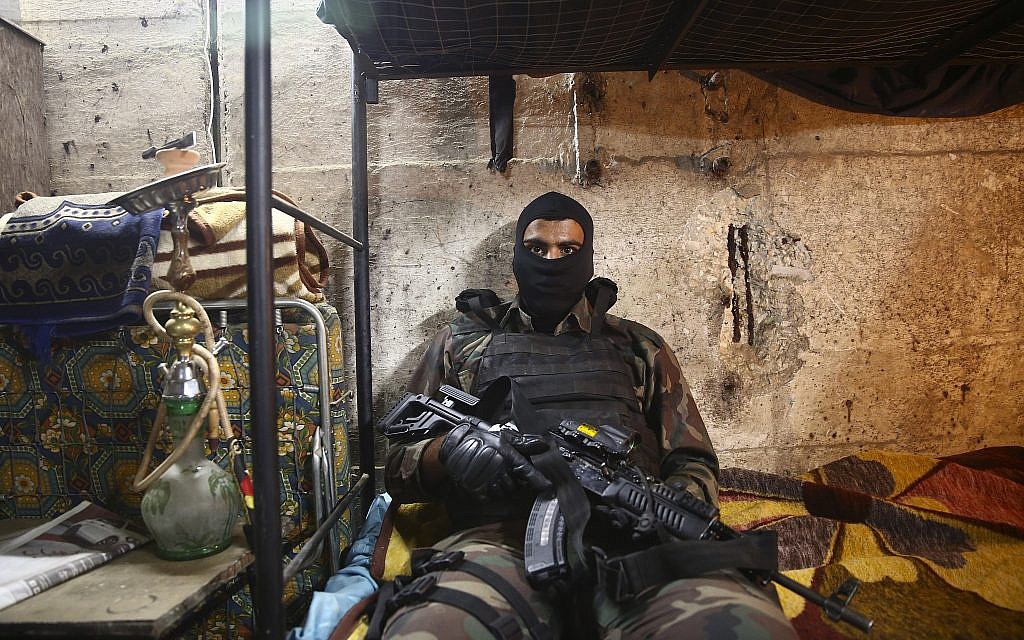
In this May 30, 2019 photo, an actor waits for his scene on the set of Israel's hit TV show "Fauda," in Tel Aviv, Israel. (AP Photo/Oded Balilty)

Israeli tv is known for it's production quality, realism, and violence, all of which tend to appeal to the younger generation of Americans who grew up with violent and realistic movies and video games. The most popular Israeli show worldwide is Fauda, which in Arabic means "chaos" but more commonly refers to a violent riot. The show is split perspective between an Israeli secret service/FBI adjacent counterterrorism unit and a couple "shahid" (martyrs or terrorists depending on who you are) who fight for a military wing of Hamas, the quasi-official government of Gaza. One of the main themes of the show is how far should government agencies be willing to go to quash extremism and terrorism? As Hamas kills more and more Israeli civilians, should shabach (the FBI guys) be allowed to kidnap and kill wives and fathers of the Hamas operatives? Because the show frames the conflict with both sides practicing violent and evil tactics, it is popular with both Israeli viewers who appreciate the honest and non-propagandist story, and Palestinian/other Arab viewers who feel they are portrayed as people rather than faceless monsters. The Israeli/Palestinian conflict is complex, and needs a complex show to adequately deal with the subject matter. 

Because the show is produced by Netflix, it comes with high quality subtitles in pretty much any language you could choose which makes it easy to understand and translate words or phrases that you are interested in. Also, because it is such a ubiquitous show among Israelis (and a point of national pride), they are quite willing to discuss the show and help to understand what the characters are talking about in any certain scene. It hits especially close to home for many Israelis because they personally have been affected by both sides of the conflict in very concrete ways, unlike in America where although we have been at war for almost decades now serving in the army is rare and it can sometimes feel extremely far away. Some interesting things I have learned about the show: the main character (pictured below), who is something like a plainclothes FBI agent who conducts assassinations and kidnappings for Israel actually had this job in his youth. That was likely during the time of the second Intifada in the early 2000's, when there was a surge in Palestinian suicide bombings against Israeli civilian targets. So the actor who plays this character likely carried out very similar missions and fights to what is portrayed in the show. The show is directed by him as well. The show is mainly filmed in Israeli-Arab areas where there is peace rather than the west bank or Gaza where fighting continues today.

Image result for fauda

One of the things I found interesting concerning language used much words relating to war or violence have been adopted into Hebrew slang. Here are four slangy ways to say  "good:"

Esh - fire

Satzah - bomb

Til - rocket, as in the rockets that are regularly fired at Israeli cities

Pagaz - shell, as in artillery shell

Since almost all youths serve in the army, it makes sense that so many army-centric words would make their way into common parlance.

Read more…

discussion post #4

The two big sounds in hebrew that don't exist in american english are ch and r. This ch is probably the most recognizable sound in hebrew, if you ever hear someone speaking and they say this sound often they are likely speaking hebrew, or arabic to a lesser extent. Even if you don't know anything about Hebrew you probably know words that are meant to be said with this sound. Hannukah, an important jewish holiday that every american has likely at least heard of can also be written Channukah since the first sound is the hebrew ch. The sound itself is like an H that is choked in the back of the throat. It isn't very pretty, but it is important and sounds scary if you need to yell at someone. My language partner reminded me that  a big mistake that foreigners make when pronouncing this letter is focusing too hard in it. Since americans usually have little difficulty with the rest of the word, we often overpronounce the ch since we are thinking of getting that one part right. The more native pronunciation is relaxed and not so exaggerated. Here are some words I know that use ch:

nachon - right as in yes you are right

achi - bro

ochev - eat

ma shlom cha - whats up

The other difficult sound is an r. Because the american r is very unique, we often have a difficult time learning other languages version of the letter. Hebrew's is deep in the throat, untrilled (unlike arabic) and similar to the french r as far as I can tell. Not every r is pronounced this way however  - so far it seems like r at the beginning of a word is more similar to ours, as in "raba." One funny story I heard about this letter from an Israeli soldier : she spent about three years in America growing up and therefore had a pretty American r while speaking English. She told me that she could never fall in love with anybody who pronounced r the Hebrew way because she found it so extremely ugly. A word with this r sound:

perot - fruit

That's actually all i know so far because this sound is much less common than ch. Also I don't like pronouncing it so maybe I skip some of the words with it in it.

Read more…

Learning blog 2

Now that I have met with my language partner a couple of times I can speak with much more confidence about the things I am doing right and the things that I am doing (very) wrong. Overall I am happy with the progress I have made, but I do feel like there are limitations in language self-study. Without being in a classroom and meeting almost every day, it is difficult to remember to study Hebrew and to retain new vocabulary. Luckily, Hebrew is not a particularly difficult language and my sessions with my partner are fruitful enough for me to have made significant progress, especially in the realm of pronunciation. My "ch" sounds much more natural and words like aruchat which I previously struggled a lot with have become much easier. My partner didn't unfortunately have any wise advice about how to pronounce the r, which I still struggle with. Thankfully it is not an incredibly common letter and mispronouncing it, according to my partner, makes me sounds foreign rather than flat out wrong. I have also learned more slang and useful phrases like slicha (excuse me), ma ko re (whats good), and yafa (cutie). The last one actually came from my dad, but my partner got quite a kick out of being called that. I also learned the word metzekoah, which literally translates to half-power, but is slang for so-so. It was interesting calling my dad and saying these new words so he could see how much the language has changed since he lived in Israel over 30 years ago. So far the most impressive activity I have been able to do is pretend I am at a restaurant and order food for me and my partner, who also happens to be the waiter. Through this activity I have learned some cultural particularities that I might not have gotten from reading a textbook. I knew the word for hurry up (maher) previously, but I would never have said that when ordering, because in America and especially in the south that would be seen astonishingly rude. But apparently that is said in Israel quite often, occasionally paired with benzonah (son of a *****) although I believe that is reserved more for traffic situations. Either way, this method of learning primarily from native speaker who has never taught a language before means that adapting to cultural differences and linguistic differences goes hand in hand, and I think so far it has been working out well. In the coming weeks I hope to continue work on pronunciation as well as begin to learn more about the grammatical structure of Hebrew as well as male/female conjugations, since part of the activity involved using verbs such as I want and I eat. Looking ahead, over fall break when I have more time to study I want to begin on the alphabet so I can stop using the crutch of a latin alphabet. The timing for that is on purpose as my Arabic class has mostly finished the alphabet and diacritic lessons and I didn't want to learn them at the same time. One of the things I look at daily that makes me proud and motivated is how many different keyboards I have downloaded on my phone... 6! with that get used often. I would definitely recommend downloading the keyboard of your target language even if you don't really use it. It is at least cool to look at!

Read more…

Learning blog 1

I will meet with my language partner for the first time this coming Tuesday. Unfortunately the times didn't work out so this is the earliest meeting available, but I have taken this weekend to do my own preparations to make the meeting easier and more effective for me and my partner. For the first couple weeks what I hope to focus on is basic phrases and pronunciation, because I feel like I will be more motivated to continue with the language if I feel like I already have some ability to just speak. Also, I want to impress my dad over the phone with what I can say, and I hope to understand whatever inane cursing he yells back. To that end I have been splitting my preparation time between the app Drops and various sources online that list common and useful Hebrew phrases, such as "how are you?" and "im good, thanks." One of the questions I plan on asking my language partner is if these phrases that I have reviewed actually see much use in Israel. I know from seeing some ESL textbooks that the English they teach kids first learning the language can come off stilted and awkward if said in an informal context. I guess the reasoning is that its better to be accidentally formal in an unfamiliar situation rather than accidentally informal with people you shouldn't be casual with, but since I will most only be talking with my father and my friends for the time being I would rather learn to speak like a native 21 year old - for instance, saying whats up as a greeting and not expecting an answer I think is a good example of a native American habit that might seem odd to foreigners even if they speak excellent English. I hope my language partner will be able to help with those kind of questions.

On Drops the first chapter is all about food. I think that is a pretty good category overall because it contains words that you will always need to use regardless of who you are. So far I have learned words like lechem (bread), maraq (soup), mazleg and kaf (fork and spoon), and the very difficult to pronounce aruchat boqer (breakfast) and perot (fruits). What makes these quite difficult is the ch and r sound in Hebrew that are pretty distinct to how how we say things in English. The ch is a gargling sound from the back of the throat, and though I can make the sound I have trouble doing it consistently. It helps if I have recently taken a drink of water or a smoothie or something though. What makes aruchat particularly difficult is that you must slide into the ch from a vowel sound, u. It is a tricky word to make sound natural but I think I am making progress. The r is more like the french r I believe, and I have no hope of doing this correctly as of now. Hopefully by my next journal I will be doing better!

Read more…

discussion post #3

So far my study of Hebrew has been through hearing and repeating with my language partner rather than reading into the definite mechanics of the language. I find this is a better starting point for me, to quickly begin to feel like you can speak the language, rather than going from the ground up. That said, I have noticed a couple of similarities and differences between other languages. Because Hebrew is Semitic, it shares many common roots with Arabic. The Arabic alif ا  and hebrew aleph א are basically the same letter, with the pronunciation of "a". Depending on stress, the letter can change to more of a "i" or e" however, and that is shared by both languages. Also similar is how vowels are written. طالب is "talib" in arabic but is written with only one vowel, the other one is dropped and not written although it is still pronounced. לחם is "lechem" in hebrew but has no vowels written. One difference between the two is how male/female and conjugations work however. Arabic has up to 13 different conjugations based on who/what the speaker is referring to! Hebrew only has a couple, and the general bluntness of Israelis means that sometimes they don't bother addressing people at all.


Read more…

discussion post #2

One interesting thing I thought about when looking through the readings and playing with the culture comparison tool was how this affects (or is affected by) the development of language. It seems that in cultures with a high power distance such as Russia or China language is built to have forms of address delegated to one's established place in that culture, like the difference between zdrastvui and zdrastvuite in Russian (not sure how to spell in English) or ni hao vs nin hao. Both second forms are used to address someone who societies see as above the speaker. Countries with a comparatively low power distance such as the US or Israel don't have words that fulfill the same role - both (American) English and Hebrew use the casual "you" to address elders or superiors. Also interesting is the emphasis placed on given and last names. In Russian the patronymic name derived from the first name of the father is an important part of introductions showing that family connections and history is important in societal interactions. Similarly in Chinese the family name is placed before the given name possibly indicating the presumed importance of the family over the individual, whereas in English first names are used with extreme frequency. On the west coast some adults prefer to be called by their first name only, even if the speaker is younger than them and would normally call them Mr. or Ms. In modern Hebrew a formal address doesn't exist, and even when older than you many adults introduce themselves by their first name and expect a casual address moving forwards. These four cultures scored similarly on the collectivism and individuality scale as well, which may be another factor.

Read more…