
I'm not disppointed with where I am in Turkish- I know that it's always tedious and language learning is kind of slow at the beginning of starting a new language for me because I struggle to contextualize everything with the little information that I have. And not being in a formal classroom affects that a little bit. However, after a semester of exposure, I tend to do better and perform faster. Two of my goals from my learning plan were not met, but I did a learn a lot of other things in place of it. I also found that since I'm not applying the concepts as often as I should (in terms of speaking and practicing grammar), it's been harder to use them in context. For example, the suffix pronoun ordeal is very difficult for me and studying it doesn't help since I'm not applying it as much on the spot. I've made the most mistakes by forgetting to attach the suffix to the end of a word so my grammar in Turkish probably sounds like a caveman. Regardless, here are some new goals for next semester: SURVIVAL TURKISH- asking for directions, transportation, family, and immigration/refugee vocabulary (just to have that in my book for what I'm interested in).
Noraya Razzaque's Posts (72)
Sort by
This word document has my outline for the project:
Turkish Public Perspective on Syrian Refugee Crisis Notes/outline
This link is to the prezi presentation:
https://prezi.com/a-xyanzqko5-/edit/#59_95982358
The Turkish words I use are the following:
Guest = Misafir
Refugee = mülteci
Urban refugee = kentte yaşayan mülteciler
Temporary asylum = geçici sığınma
Government = hükümet
Refugee camps = mülteci kampları
Burden sharing = yük paylaşımı
Policy/policies = politika/ politikalar
As I mentioned in an earlier journal, Arzu printed out lyrics to a song that we listened to in class and had me fill in the blanks. This was a cool activity to do in order to practice spelling Turkish words as well as listening comprehension! Two birds with one stone. As for the second worksheet, it was part diction, part putting the appropriate vocabulary next to the correct picture. Regardless, these were all good for listening and writing in Turkish.
When I was in Istanbul, I noticed a lot of Syrian children and street performers in tourist areas such as Taksim. I ended up having a discussion with a new Turkish friend in my time there about the refugees. At the time, I had commented on how unfortunate it was that there were so many homeless Syrian refugees in the streets we saw and what policies Turkey had about them. I was taken aback by how irritated she seemed at the situation- she had responded with a frustrated, "the Turkish government has done a lot for them, there are camps, but they don't stay there. They should stay inside their camps and not come out." She then went on to talk about the crime rates in the cities and how the "astray" Syrians were the culprits. She had an especially unfavorable opinion of Syrian men and said women were less safe because of it. I don't know how true her perceptions were, but it made me wonder about the general Turkish public's opinion of Syrian refugees. I want to learn about Turkey's past and current policies, the pros and cons, what is being done to improve the negative aspects of those policies, and discover the public's sentiment towards the government's reaction to all of this.
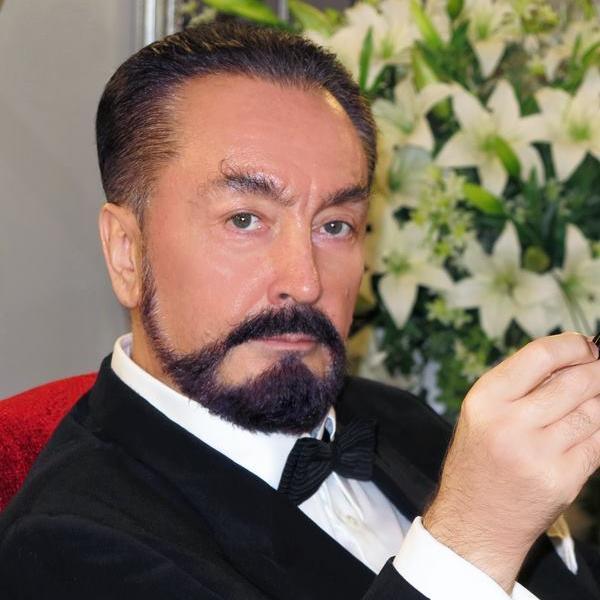
A couple weeks ago, I saw this vice documentary on Adnan Oktar and found it fascinating. He's interesting to me for the following reasons: he's the first Muslim creationist I heard of and spins Creationism on Islam, claims to be a staunch feminist, and is a famed cult leader in Turkey. He has his own TV network, televangelist form, and has written hundreds of books trying to disprove evolution. He rose to prominence in the 1980s during his higher education in Istanbul and appealed to young wealthy generations. He argued against Marxism, Communism, and the like. He sought to intertwine scientific rhetoric and mysticism in his ventures. Not only has he had multiple run-ins with the law for things such as inciting a theocratic revolt and organizing crime through his cults/following, but he's also spent time in a mental hospital.
Everything about Adnan is ridiculous to the public- when I brought him up to Arzu, she scoffed and called him a joke. In this short documentary a Vice reporter, Broadly, is invited to his show. She arrives during the day and receives a tour of the house- in which she finds "fossils"that he collects that apparently prove creationism. Before the show begins, she's taken into the makeup studio to be prepared for the show, however, bizzarely, Adnan's men do not allow these portions to be recorded. Broadly goes on to appear on the show and later Adnan's followers join her.
Adnan's followers are mostly wealthy socialites who describe themselves being "liberated" through Adnan and his demonstration of feminism and Islam. They refer to themselves as "kittens" and are highly sexed up in their attire and makeup- it's evident they use lip plumps, most of them have bleach blonde hair, and wear heavy eyeshadow and lipstick, and even have gone under the knife. It seems that these qualities are what make them feel liberated. To give an instance of how strange the show is, on air, dance music would play at random intervals and the "kittens" would begin club dancing in their seats.
The documentary sought to understand Adnan's cult, but at the end of the ordeal, the events were still mystifying- there wasn't an explanation for why his cult operated why it did, what the logic was behind the "kittens'" appearance, and on what level the entire scenario was Islamic at all. In fact, the entire time I was reminded of our very own Hugh Hefner and the playboy mansion.
Adnan Oktar https://broadly.vice.com/en_us/video/inside-the-weird-world-of-an-islamic-feminist-cult
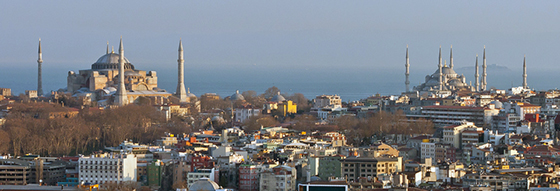
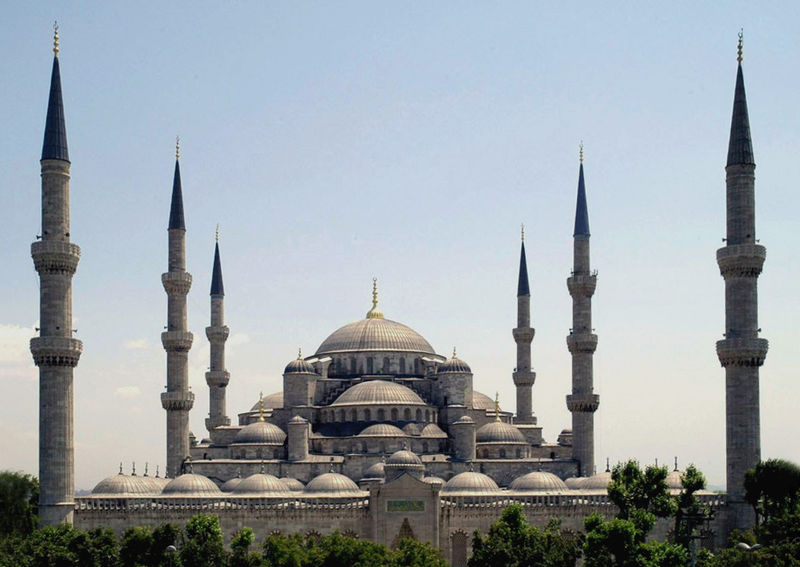
Turkey has numerous beautiful historical landmarks, remnants of the Ottoman Empire's lavish days. The Blue Mosque, or as it is called in Turkish, Sultan Ahmet Camii was my favorite landmark in Istanbul for its architectural style and design. It was planned by the architext Sedefhar Mehmet Aga and included new elements and styles for its era and built between the years 1609-1616 (commissioned by the Sultan Ahmet I). The sultan had commissioned the mosque to assert Ottoman splendor and power after the Peace of Zsitvatorok (which had weakened the empire), however due to lack of funds, it was a move that showed his weakness. Normally spoils from war victories funded grandiose mosques, but Ahmet was not known for his political prowess. In a scandalous move, he paid for the mosque through the royal treasury. Sultan Ahmet wanted this mosque to be at the forefront of all the mosques in terms of imperial beauty and location- which is why he built it across from the Hagia Sofia at the central point of the city. In its time, the juxtaposition of the location was rife with political and religious symbolism. Even today the location is heavy with meaning- it's a beautiful depiction of religious harmony for Islam and Christianity. It is for this reason that I love the Sultan Ahmet mosque as much as I do, it serves a beautiful image of peace and tolerance.


These are some worksheets I did for introductions. I found them to be very helpful since there were different exercises practicing/going over the same vocabulary, but with different arrangements.
In prior weeks, I learned the Turkish numbers and how to talk about jobs (mainly questions and job vocabulary), but I did not write about it. But in weeks 8-12 I learned about the weather, seasons, and days of the week, how to talk about age, and the grammar construction for "there is/are" (ex: Is this a pen? What is this?), and a set of adjectives.
The second to last week of our meetings, Arzu showed me a Turkish song, "Anlıyorsun Değil Mi?" and printed out lyrics to it for me to fill in certain words while we listened to it. We listened to two versions of the song which I will include below. But I absolutely loved this exercise because it incorporated grammar, listening, and writing skills! Grammar because one of the concepts we learned early "değil mi" was in it. Değil mi- mi is used to phrase questions and değil means "isn't" a negation word. I learned how to use "değil" to say if there isn't something and "mi" to phrase questions about whether or not there is class.
We did a lot of role playing to practice the concepts, as we always do. Arzu gave me printouts to fill out and match as well. I actually had a hard time applying concepts I learned for "there is/isn't" and "this is/isn't" because the concept is different in Turkish than it is in English, especially in negating them. There are different words to use for nouns and adjectives In Turkish, unlike in English where we use "not" for everything.
English/For example: Q: Is there class class tomorrow? A: No, there isn't class tomorrow.
Q: Is this a pen? A: No, this isn't a pen.
Turkish/Example: (There isn't) Q: Yarın sınıf var mı? A: Hayır, yok.
(This isn't) Q: Bu kalem mi? A: Hayır, bu kalem değil.
As you can see from the examples, there are two different negations used to answer the questions. The reason why there are two is because there isn't 'is' in Turkish. That always throws me off because I'm thinking in 'is' structure because of English. Again, like most things, exposure and practice will help me overcome making mistakes over this.
The days of the week were easy to memorize. Arzu gave me a chart to fill out in which I would have to ask questions such as "Is there math on Wednesday?" and she would answer using the grammar construction I just talked about. We alternated roles and filled out the chart through prying for answers. It was a great exercise for me because it was repetitive and visual. We did the same thing for the weather- when we learned about temperature in our next class there was a chart where we asked each other questions to get to the information we needed.
Arzu and I decided we were not going to get into verbs until next semester because she said they were complicated and may be confusing. However, I found this resource and will bookmark it for future use because it has a handy looking chart for conjugating and I'm confident it will be helpful for visuals.
Despite not learning adjectives, she did teach me how make non verbial sentences.
EXAMPLE:
She is a beautiful girl = O güzel bir kız (third person does not take any suffixes)
I am a beautiful girl = Sen güzel bir kızsın
*The personal pronoun takes to the noun of the sentence in suffix form
We can also see the vowel harmony in the word "girl" where 'ı' takes 'ı' in the suffix.
These are the suffixes:
I = im
You = sin
You (formal) = siniz
He/she/it = no suffix attached
We = iz
They = no suffix attached
Since most of the activities that we do is verbal and minimal writing, this is/was a hard to retain. I am able to memorize it and know it well for a period of time, but as I don't practice it enough on my own, I forget it. I'm a tactile learner as well as visual, so writing helps me retain a lot of what I learn. I rewrote new words at some points to practice, but I wasn't consistent about it. Ideally, I'd take new vocabulary and write it out with the pronoun suffixes and the concept would stick. This is something I need to be better about and can do to review my Turkish over winter break.
Resources:
VERB CONJUGATION:
http://learnturkish.pgeorgalas.gr/ConjugationSetEn.asp
GRAMMAR INTRODUCTION:
General overview of Turkish grammar that I've learned (sentence order, suffixes) and haven't learned (verbs).
http://www.turkishclass.com/turkish_lesson_1
BASIC TURKISH VOCABULARY AND PHRASES:
Great composition of the basic phrases in introductions, greetings, and vocabulary that I've learned. I love how it is charted (going with the visual half of my learning).
Vowel harmony is a crucial part of Turkish grammar. When attaching personal pronoun suffixes to nouns or adjectives, the vowel of the suffix changes to agree with the preceding vowel. This is the vowel composition:
e, i takes i
o, u takes u
a, ı takes ı
ö, ü takes ü
EXAMPLES:
I am a doctor = Ben doktorum
You are a doctor = Sen doktorsun
You (formal) are a doctor = Siz doktorsunuz
He/she is a doctor = O doktor
We are doctors = Biz doktoruz
They are doctors = Onlar doktor
I struggle with vowel pronounciation, so in speaking I have a difficult time figuring out which vowel to use. The vowels 'e', 'i', 'o', 'u' are easy to remember since I don't struggle with them, but I do with the rest of the vowels. Despite that, I've definitely gotten better at vowel pronunciations! I got 'ı' down from listening to various videos until it finally clicked. Visualizing where the sound is supposed to come from helped and when I related it to some guttural Arabic sounds and cut short those sounds I already knew how to make, I got better with it. Doesn't mean I can necessarily pronounce it correct, but it's in my head and I know with practice it'll get there as my throat gets used to making those sounds.
This is a resource that I use to see more examples of the vowel harmony. I'm going to keep it here for reference if I need to review vowel harmony again:
Socializing is so integral to hamams that it was and, to an extent, still is a hub for things like searching for daughter-in-laws to holding business meetings. Although it is not as popular as it was in its earlier days, hamams are now marketed towards tourists and part of pre-wedding rituals (women goes to the hamam with her female friends and family as a ritual leading up to the wedding).

The structure of a hamam is as such: bathers first go into the warm room where they can relax and perspire in the hot dry air and prepare to go into the hot room. The hot room intensifies the sweating and then the bather goes into the steam and massage room. A masseuse scrubs the bather down (there's lots of dead skin and invasion of personal space involved) with a rough loofah-like sponge or pebble and soap. A massage follows the washing after which the bather goes to finish relaxing in the cold room or pool (if there is one). The last room is where the most socializing would occur with music and sweets.
10 Reasons Why I Love Turkish Cuisine:
1. Turkey can produce enough food to sustain its people (one out of seven countries in the world that can do this!)
2. Yogurt is a staple to complement dishes.
3. Dolma. This rice-and-meat-stuffed vegetables dish reminds me of stuffed kusa (squash) from Jordan, but tastes so much yummier.
4. Rice, wheat, vegetables are staples for Turkish cuisine. My favorite things in food.
5. Among the seasons often used are dill, mint, parsley, cinnamon, garlic, cumin, and sumac. I don't even like dill, parsley, and cinnamon in dishes, but there's something about the way Turks cook.
6. Eggplant, zucchini, beans, artichokes, and cabbage are the most common vegetables to eat.
7. Simit is like a soft sesame pretzel sold on the streets. I could eat them forever.
8. Kebap- grilled meat which is similar to shish kebob. The meat is skewered in between vegetables and onions and flavored perfectly.
9. Turkish coffee. For coffee lovers, it is definitely something to experience. While the grounds are very thick, part of the experience in drinking the coffee is telling your fortune with the dregs. In order to do that, you put a small plate on top of the coffee cup and flip the entire thing over so that the plate is flat and the coffee cup upside on it. You wait until the cup is cold and then you interpret the globby remnants!
10. Baklava- paired with Turkish coffee or tea, not too sweet, not too less, textured...this is the icing on the cake for Turkish cuisine.
Unlike most cuisines, Turkish cuisine did not happen as an accident. It was the product of its geographical environment, social atmosphere, and thriving empire that indulged in all things lavish- including perfecting recipes for the royal palace. Its cross-roads location between Europe and Asia allowed for an effective spice trade as well as receiving influences from both ends, amalgamating in what is Turkish cuisine today.

References:
http://www.turkishculture.org/culinary-arts/cuisine/turkish-food-302.htm?type=1
http://www.foodbycountry.com/Spain-to-Zimbabwe-Cumulative-Index/Turkey.html
I love learning about the history of languages and which languages have influenced one another because it adds so much more context to language learning. In the case of Turkish, I know that Turkish has a lot of Arabic words imported into the language, and that Hindi has taken a lot of Turkish words. One day while I was studying pronouns, it occurred to me that Bengali and Turkish have the same pronouns to refer to he/she, 'o'. I was really surprised by it as it was an unexpected discovery. Moreover, both Bengali and Turkish don't have gender. These similarities piqued my interest furthermore; unfortuntely when I did research to see the correlation, I could not find anything. I will keep searching, however!
Turkish dates back 5,500-8,500 years. It is in the Turkic language family and spoken in parts of Asia and Europe (Such as in Cyprus, Northern Cyprus, Greece, Iran, Bosnia). It also belongs to the Ural-Altaic family of the Altaic branch and is closely related to Mongolian, Korean, and potentially Japanese. This language family has the following features in common: vowel harmony, lack of gender, agglutination, adjectives preceding nouns, and verbs placed at the end of sentences.
With the influence of Islam, the Kara-Khanid Khanate and Sejluk Turks took a lot of Persian and Arabic loanwords for their administrative language. Not only that, but this extended to Turkish literature, especially in the Ottoman period. Historically, the official language of Turkish in this period (1299-1922) is called "Ottoman Turkish" (mixture of Turkish, Persian, and Arabic). This was similar to the language of prestige because it was unintelligible to the average Turk who spoke "rough Turkish" or kaba Türkçe as they say in Turkish. Rough Turkish is closest to the modern Turkish spoken today. Ottoman Turkish changed with the establishment of Turkey under Ataturk and the Turkish Language Association in 1932. The association sought to replace the aforementioned Arabic and Persian loanwords and purify Turkish by beginning a language reform. In doing this, many "new" words were derived from Turkic roots, but when an equivalent could not be found, Old Turkish unused for centuries were utilized.
As a result of this change, there was a shift in older and younger generations' vocabulary. Generations born before the 1940s continued speaking in Ottoman Turkish while the younger generations used the updated/purified modern Turkish.
Fun fact: In 1927, Ataturk's speech to the new Parliament needed to be "translated" to later generations a total of three different periods (1963, 1986, and 1995) because his Ottoman Turkish was so archaic to the listeners.
Source: http://www.turkishculture.org/literature/language-124.htm
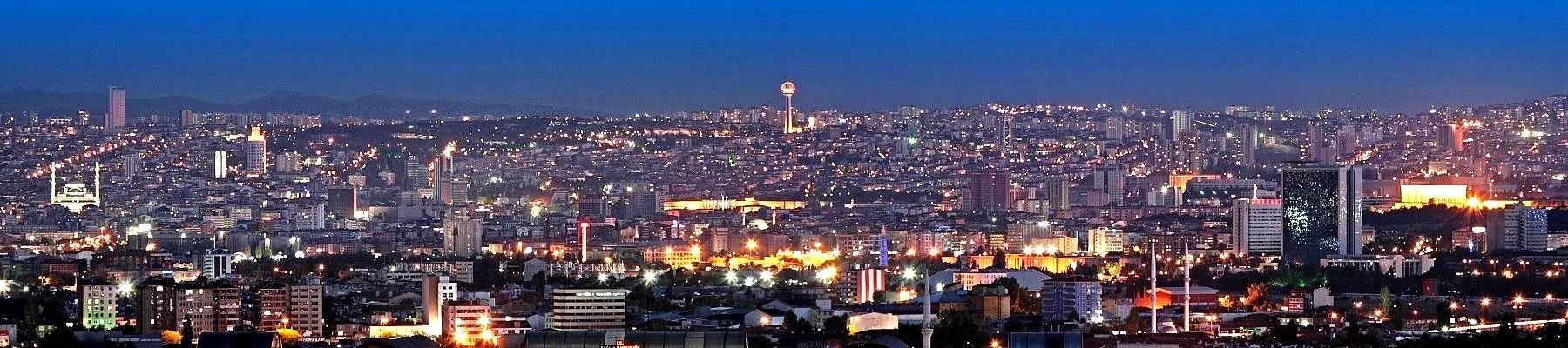
Since my tentative plan is go to Ankara, I wanted to do a culture post talking about Ankara! Unlike popular belief, Istanbul is not the capital of Turkey, but rather Ankara. It's an easy mistake I made in the past- and why not? Istanbul is a central point because of its geographical location between the East and the West, is a splendid city, and the largest city in Turkey- it could certainly be the capital. Ankara holds a lot of history spanning from the Hittites, Greeks, and Romans to Byzantines and Ottomans.
Climate: Similar to the northeast U.S. in its hot summers, cold snowy winters, rainy in the spring and autumn.
Tourist attractions:
- Anitkabir: Location of Mustafa Kemal Atatürk, the founder and first president of Turkey's mausoleum.
- Temple of Augustus (Augustus Tapinagi): Built in 25 BC, has inscriptions of Augustus on the walls. Has other attractions nearby such as Julian's Column (Jülyanüs Sütunu).
- Kocatepe Mosque: Fully completed in 1987 despite having a lot of halts, can hold up to 100,000 worshippers. Many view it as prime Islamic architecture because of its neo-classic Ottoman style.
- Ankara Kalesi: a stategically placed citadel.
Population: 4.588 million
Geographical location: Central Anatolia, northwestern part of Turkey, south of Black Sea.
Ankara is second to Istanbul in almost everything- size, industrial manufactering, and tourism. The service and tourism industries are expected to grow. In terms of manufacturing, the production of wine, beer, floud, sugar, macaroni, biscuits, milk, cement, mosaic paving, construction materials, and tractors are entrenched in the city. Since it is the capital, government is the city's central.
Fun fact: Ankara was formerly called Angora! Ex: Angora wool, Angora cat, etc comes from Ankara.
I recorded myself practicing introduction conversation with myself from reading my notes. I began with a normal conversation- neither formal nor informal. And then I did informal and informal for intimate friends. I think my pronunciation in this is fine, but I should have done an impromptu conversation with Arzu to really force myself to grapple with speaking spontaneously and thinking on the spot.
Since I'm a stickler for pronunciation, my first artifact is reading the Turkish alphabet. Evaluating my pronunciations, I know I got some of the vowels wrong- probably the ö and ü and ı. I need to be practicing with various words to improve making those sounds correctly rather than just repeating the vowel on its own. And obviously reading it with the help of consonants is good practice for where the sound is coming from with the vowel. For example, a 'k' paired with a vowel will have different movements than with a 'p' paired with a vowel.
I asked my friend Maria to be my student to teach her some Turkish. I decided to do these two things:
1. Repeat the Turkish alphabet
2. Greetings and say her name
The Turkish alphabet wasn't hard because they're the same as in English except for a few letters that we don't have in English- however it helped that we had those sounds despite not having the letters (ch and sh, for example). Like me, she had trouble pronouncing some of the vowels, particularly ı because it comes from the back of the throat.
Maria is a visual learner so when I was teaching her how to say hello and her name, she wanted to see the words written out rather than just hearing it from me. So I wrote it on a piece of paper and she memorized that/used the paper for guidance. It was easy to teach her to say "Merhaba, adim Maria" because I didn't have to teach her anything other than that as a phrase. I think her Spanish helped her pronounce things more correctly than an average native English speaker, too.
This made me realize how important visuals are for learning- I'm also a visual learner, but I always forget how important that is to me when it comes to learning languages. It easily slips my mind that one of the reasons that language concepts are harder for me to grasp/hold on to if I'm not able to visualize it and then apply it. Teaching Maria made me realize I need to do more visual activities when I study/practice Turkish, among other languages.
Nerelisin?
(Where are you from?)
add other questions about what nationality are you? what country are you from?
In order to say where you're from, you take the country and drop suffixes such as "ya", "istan", or "iye" and you get your nationality. There are exceptions, as there always is, and those require memorization or further knowledge of Turkish grammatical structures.
When talking about the language of a country, there is a suffix that attaches to the end of the word using vowel harmony. For these vowels: ........... the suffix is ca while it is çe for these vowels: .............
Ülke (country)
Milliyet/uyruk (nationality)
Ülke Milliyet
Italya Italyanca
Türkiye Türkçe
Japonya Japonca
Rusya Rusça
Yunanistan Yunonca
Suriye Suriyeli (Arapça)
Isponya Isponyolca
Amerika Amerikan/Amerikali
Bangladeş Bangladeşli
Fransa Fransizca
Ingiltere Ingilizce
Almanya Almanca
I also started learning about professions. There are a good chunk of words that are the same as English, French, and Arabic, so it should be easier to remember. For example, the word for pilot is pilot (but with Turkish pronunciations).
Arzu and I practice introductions every time we meet. We do different variations of things we can say to each other (according to the very limited vocabulary I have). Today I found out that she is an English teacher in Turkey! This explains a lot about her style of teaching- she's very aware of teaching/learning methods that would be useful to me. She gives me a lot of worksheets to work with at the start of class to review concepts/words we talked about in our previous meeting. A lot of them are matching, which I like because sometimes I won't always remember a word or a phrase, but seeing it in front of me helps me put them together. This in turn helps me recognize it next time while simultanouesly improving my memory of it. Arzu suggested I text her in Turkish with what I know in order to keep the knowledge I have going, so I might start doing that. I don't feel like I need to go any faster than I am right now in terms of pace because it's not a classroom setting. I do want to get started on more grammar though to understand the foundation of the language. It helps me put perspective to what I'm saying and the words that I encounter if I know the grammatical makeup/structure of it.
I learned the alphabet and introductions last week.
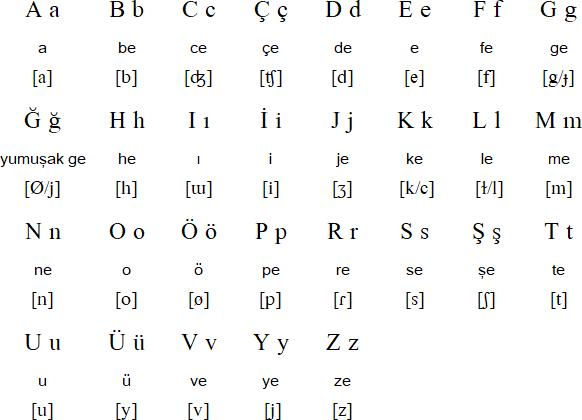
The sounds that I keep having trouble with remembering are these letters: ü, ı, i, e, ö. I think its hard to remember these because the vowel sounds that I'm used to doing in Bengali, Hindi, and Arabic are so different from these. They remind me of German and French vowels, which have vowel sounds I'm not familiar with speaking. I think my best bet will be to listen and imitate daily until I get used to forming these sounds correctly.
I learned basic introduction phrases. This is an example of a typical conversation:
A: Merhaba/Selam (Hello)
B: Merhaba
A: Ben Arzu. Adin ne? (I'm Arzu. What's your name?)
B: Benim adim Noraya. (My name is Noraya)
A: Memnum oldum. (Nice to meet you)
B: Ben de memnum oldum. (Nice to meet you, too)
A: Hoşçakal. (Goodbye- person that is leaving)
B: Güle güle! (Goodbye- person that is staying)
