
This was recorded with Ben Lee and our language partner, Jannette You.
Grace Ahn's Posts (15)
Sort by
Reflecting on my experiences this semester, I am very happy with the progress that I have made as a language learner. I enjoyed having the autonomy to create my own learning plan while learning at my own pace. At the same time, I think the most challenging part was following the weekly learning schedule that I planned out for myself at the beginning of the semester. I definitely made changes along the way but I think it was still a good way to organize my goals.
Some of my favorite learning activities included singing Korean karaoke, texting my language partner in Korean, and cooking Korean food with my language partner. All of these activities strengthened my listening, reading, speaking, and writing abilities, in a fun way. I also learned a lot about Korean business culture through my final cultural research project. It was insightful to learn about the differences between what I am accustomed to seeing here in the U.S. compared to Korean business settings. I also really enjoyed hearing the cultural presentations of other language learners in my SDLC class and, overall, it was really great to see the progress each of us made in our own target languages.
In class, I found our unit on grammar (morphology and syntax) to be very useful. Our discussions on derivational and inflectional affixes helped me learn how to break down Korean words to better understand their meaning. Moving forward, I plan to continue developing my Korean language abilities, with a stronger focus on speaking in case it becomes useful in the workforce. I also look forward to learning new vocabulary as I continue listening to Korean music and watching Korean content on YouTube and Netflix.
Over the past few weeks, I’ve taken the time to improve my Korean listening skills by watching Korean television shows that are available on Netflix. One that I particularly enjoyed watching was Twenty-Five Twenty-One, starring Nam Joo Hyuk and Kim Tae Ri. I thought that the story was well written and I loved each of the characters’ personalities. The show takes place during the 1990s during the Asian Financial Crisis and follows the story of a teenage girl and a young man who are working to accomplish their dreams during hard times.
From watching this drama, I learned about the IMF crisis and some of the difficulties that South Koreans faced due to the unprecedented foreign exchange shortage in December 1997. I learned that this was a very painful period in Korea’s history because so many people lost their jobs and their livelihood. I also learned a lot of new Korean vocabulary on topics like fencing and reporting. For example, breaking news or 긴급 속보 (gingeub sogbo) was a word that came up very frequently throughout the episodes as one of main characters becomes a reporter.
In addition, my language partner and some other SDLC students took a trip to Northern Virginia where we enjoyed our last Korean meal together. We ordered our food in Korean and thoroughly enjoyed the Korean BBQ and the variety of side dishes offered at the restaurant. We also talked about our experiences taking SDLC this semester and how we planned to continue our Korean language learning moving forward.
https://docs.google.com/presentation/d/1HC04yeSsZOKclQ7v7D6n3Z8h5Mbh3FXwDI74I83M6EQ/edit?usp=sharing ;
In South Korea, May 5th (5/5) is recognized as Children's Day. Children's Day or 어린이날 (eorininal) is a public holiday that celebrates children. 어린이날 consists of the word for children (어린이 | eorini) and the word for day (날 | nal). Although Children's Day is celebrated in many countries around the world, it is an important holiday in South Korea where salaried workers get a day off work and children get a day off from school. Parents often give presents to their children and spend quality time with them. The children go to zoos, museums, and various venues of children-oriented entertainment. Children's Day events are becoming more commercial, becoming important events to increase sales of children's products.
Children's Day was first created by progressive ethnic Korean students, with Korean Independence movement leaders against Japanese colonialism. People from Jinju gathered to promote and improve the social status of children and encourage adults to teach awareness of their deprived sovereignty. The celebration of Children's Day in Korea has taught people about children's fundamental human rights.
Three days after Children’s Day, on May 8th, is Parent's Day. The Korean word for Parent’s Day is 어버이날 (eobeoinal). Like the U.S., this day was originally for Mother’s Day, but since there wasn’t a designated Father’s Day, the two days were combined to make Parent’s Day. However, this is not a national holiday. Traditionally, children give their parents carnations on parent’s day and many convenience stores and shops will have special displays so that children can easily buy flowers or other small gifts for their parents.
My learning highlights from these past few weeks include making Korean recipes using Korean YouTube tutorials. In particular, I have been enjoying Chef Baek Jong-Won’s recipes. Baek Jong-Won is a famous South Korean chef who owns several restaurant chains and hosts several Korean television series including Top 3 Chef King, Baek Jong-won's Food Truck, and Baek Jong-won's Alley Restaurant. As someone who enjoys cooking and eating Korean foods, my language partner and I decided that it would be a good idea to learn how to comprehend and follow directions in Korean by following along with Chef Baek’s Korean food cooking tutorials.
We decided to follow Chef Baek’s kimchi-jjigae recipe. Kimchi-jjigae is a classic Korean stew dish made with kimchi, pork or seafood, scallions, onions, and diced tofu. It is one of the most common stews in Korean cuisine. While I understood what the ingredients were in Korean, I found myself struggling to understand Chef Baek’s specific directions on how to prepare the ingredients. I also found it difficult to understand his heavy South Chungcheongnam-do dialect. South Chungcheong Province, also known as Chungnam, is a province of South Korea located in the Hoseo region in the southwest of the Korean Peninsula. As someone who grew up hearing the standard ‘Seoul’ accent from my parents, it was interesting to hear the tonal differences between Chef Baek’s pronunciation and what I am accustomed to. Although cooking a Korean recipe was not a part of my original learning plan, I think it was a good language comprehension exercise for me.
To practice my hangul writing, I started texting my language partner in Korean, using commonly used words and phrases. Texting was a new challenge for me because I kept making mistakes with the spacing between the words. It was also difficult to type certain words that were difficult to spell. For example, I misspelled the word “괜찮아” when trying to say “it’s okay” because it contained multiple characters in chunks. I found myself heavily relying on the auto-check function in my phone to fix these mistakes but it was good texting practice for me and my language partner corrected my spacing errors.
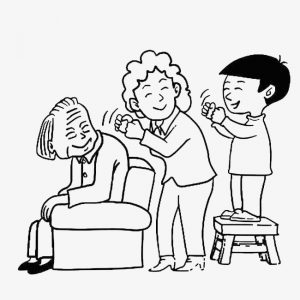
Filial piety, which is called ‘hyodo’ in Korean, is defined as supporting and serving one's parents and is a natural duty of a person. Filial piety is a mutual relationship between parents and their children. In Korea, however, under the influence of Confucianism, more emphasis is placed on a child’s filial duties toward their parents. Grandchildren are also expected to have filial piety and respect for their grandparents. ‘Hyodo’ is a natural emotion and a way of fulfilling filial obligations at the same time. Children must repay their parents with filial piety in return for giving them life and raising them, although this is not a transactional thing. Parents give their children the three “gracious favors” ('eunhye') of birth, upbringing, and wealth while children are expected to carry on the family line, support their parents, and observe memorial rites after their death. The things inherited or passed down from parents including wealth, social status and human relations are at the core of the institutionalization of filial piety. This moral standard is a large part of Korean culture and can be seen in many Korean dramas and movies. In Korea, it is not uncommon to see multi-generational families living under one roof where the children support and take care of their parents and/or grandparents.
This past month, I focused on my learning objective to improve my Korean pronunciation. My language partner, Jannette, and I thought that it would be a good idea to practice reading Korean and work on my Korean pronunciation by reading Korean song lyrics and singing Korean songs. We explored different genres including, ballads, k-pop, and R&B. I was definitely better at reading the lyrics to slower ballad songs than fast k-pop songs and I failed pretty miserably at rapping. However, it was a good and fun way to practice verbalizing Korean. Hearing Jannette’s fluent pronunciation also allowed me to compare and practice making the right sounds. After we sang the songs, we looked at the lyrics and used Papago to find the translations of any words that I was unfamiliar with. By doing this, I got to learn new Korean words from the songs we sang. Some words I learned were:
무뎌진: I got used to it
투명: transparent
그림자: shadow
화려한: glamorous
애태우다: worry/fuss about
Then, to practice using these words, I used them in sentences. For example, I said, “나는 너의 드레스가 화려해서 좋다.” This means, “I like how glamorous your dress is”. This exercise was very successful because it allowed me to grasp a fuller understanding of how these words would be used in an everyday context. Singing Korean karaoke was not only helpful in getting me to read and speak Korean, but I also got to learn more about Korean music culture, popular songs, and various artists in Korea. Although I was already familiar with the genre of Korean popular music (K-pop), Jannette shared some of her favorite Korean ballad songs with me, including 바람기억 (Memory of the Wind) by Naul and 너를 만나 (Me After You) by Paul Kim. I learned that there are a plethora of different types of music in Korea outside of just K-pop.
In addition to learning Korean through music, I accomplished my objective of learning the Old Testament books of the Bible in Korean- up until the book of Esther, which is the seventeenth book. This was not as difficult as I initially expected because some of the Korean names are pronounced similarly to the English names. For example, Ezra in Korean is ‘에스라’, which is read as ‘esra’. I also learned that ‘상’ (sang) means first and ‘하’ (ha) means latter. Samuel in Korean is ‘사무엘’ which is pronounced the same as in English (Sa-moo-el). So, 1 Samuel is 사무엘상 and 2 Samuel is 사무엘하. Learning this made it so much easier to memorize certain books of the Bible in Korean.
One of my favorite things to do in South Korea was going to a noraebang (karaoke). Noraebang (노래방), formed by norae (song/sing) and bang (room), literally means a room to sing. It became popular in Korea in the 80s and 90s after karaoke machines were invented in Japan in the 70s. In Korea, noraebang is a huge part of the culture because it’s an affordable and fun way to socialize or de-stress after a long day at work. Noraebangs are so common that you can probably find at least one on any street in Seoul, especially in recreational areas or student areas. It is common for Koreans to eat and have drinks at a bar and then go out to a noraebang to sing. Noraebangs are enjoyed by Koreans of all ages, from children to older adults. Because noraebangs are busiest in the evenings, they are often open until late at night.
Hongdae is an urban area near Hongik University known for its music culture, street shopping, restaurants, and entertainment. When I was in Hongdae, there were dozens of noraebangs, all within close proximity. Hongdae is one of the most popular places among students and young adults to enjoy nightlife and sing at a noraebang with friends, family, or even coworkers. Besides Hongdae, other popular noraebang areas in Seoul include Gangnam or Myeongdong.
Noraebang prices are calculated based on time and the number of people you are with. It is also cheaper to go during off-peak hours. The average hourly price ranges from 5,000 ~ 15,000 KRW depending on the time and the number of people. Mornings, 9am-12pm, are usually half the evening price. There are also luxurious noraebang rooms which are more expensive around 20,000 ~ 30,000 won per hour. There are also ‘coin’ noraebangs that have smaller rooms than traditional noraebangs but are less expensive since you pay per song, rather than hourly. Oftentimes, noraebang workers will give you extra time to sing or additional songs as a ‘service’ (for free). One time, my friends and I received a whole extra hour of additional time.
Sources: https://korealocalpages.com
January Language Learning Journal
Since this semester started mid-way through January, I was not able to get started on as many tasks as I had wanted to. Nevertheless, meeting up with my language partner did allow me to start practicing my interpersonal communication in Korean; a task that I had hoped to start in January. Although I have not yet used any outside language-learning tools, my language partner has become a great resource for me to verbally communicate in Korean.
Last week, Ben Lee, Jannette You (my language partner), and I went to grab dinner at a Korean restaurant to start off our SDLC and practice speaking Korean. We read the menus in Korean, ordered our dishes in Korean, and reflected on our experience studying abroad in Korea last fall. When I ordered my food in Korean, I was glad to see that the waitress (an older Korean woman) did not have any difficulty understanding my order, despite my English accent. Seeing that we all spoke Korean, she spoke in Korean to us, as well. This small interaction was an encouraging success for me.
Having Korean dishes and being immersed in a Korean environment was also a good way for me to re-experience Korean culture while learning. As we ate, we had a conversation in Korean about how eating in a restaurant in Korea was much more affordable than eating in a restaurant in Virginia. We also discussed how the food in Korea was much tastier than the Korean food in Richmond; an observation we all shared. Having a light conversation surrounding a topic like food was an enjoyable and effective strategy for me because it allowed me to retrieve and use words that I hadn’t used in a while. It was also a good way for me to practice my pronunciation and listening skills.
I plan to speak in Korean to my language partner as much as possible during our meetings and I plan to build my interpersonal communication skills as I learn new words and start integrating these into my conversations. As of right now, I do not have any revisions to make in my learning plan and my goals are the same. I plan to accomplish eight tasks that will help me improve all four aspects of my Korean language ability. Overall, I am feeling enthusiastic about my language learning journey. I know that I may be frustrated as I come across obstacles in my more challenging tasks later on, but I am excited to see how much I will have accomplished by the end of the semester.
The main idea behind Figuring Foreigners Out is that different cultures have different notions of identity and various ways of communicating. Cultures lean either toward individualist or collectivist. Non-verbal communication can either have no meaning, have the same meaning, or have different meanings in two different cultures. The concept of time is handled differently according to one’s culture. Some cultures regard time as monochronic, while others view time as polychronic. Finally, cultures can differ in the directness/indirectness of communication. High-context cultures rely on the context of situations and non-verbal communication while low-context/direct cultures need to be more explicit with what they are trying to convey. The Hofstede Dimensions of Culture is similar in that it attempts to define a country’s culture according to six dimensions: power distance, individualism, masculinity, uncertainty avoidance, long-term orientation, and indulgence.
I predominantly agree with these assessments because from my personal experience, it is very accurate. For example, I can definitely see the United States as an individualistic country since we are encouraged to become independent achievers starting at a young age. South Korea, however, is definitely more collectivistic and people associate success with the well-being and accomplishment of the group as a whole. I noticed that Koreans feel a strong emotional bond with in-group members but are less connected to out-groups. It is important to point out, however, that there may be multiple cultures within a country. Therefore, it may not be accurate to make broad-sweeping generalizations.
Link to my Learning Plan:
https://docs.google.com/document/d/1xOBpX0ZcPLKCpxXdWtWxpiQQ59TvgdvmgH9VxVUm8k0/edit?usp=sharing
I organized my self-directed learning plan by breaking my goals down into eight smaller tasks that I can feasibly accomplish. All of these tasks will help me improve the four aspects of my language skills. So far, I learned that learning a language is may not be as hard as I thought, especially with all the resources that are available to us on the internet. I also realized that language learning does not have to be boring. I do not plan to read any textbooks about Korean because I think I learn better from active engagement and fun activities. The ‘curriculum’ that I set for myself will allow me to investigate my target language and culture more deeply because the majority of my learning activities include interaction with some form of Korean material, whether it be Korean movies, dramas, music, or news article. Using these as tools for my language learning will allow me to learn more deeply about Korean culture.
I became interested in furthering my Korean language skills because as a Korean-American, I am heavily engaged with my Korean community at home. I want to be able to confidently speak Korean to other Koreans, especially native Korean speakers. For Korean-Americans, it can be considered impolite to speak in English to an older Korean adult who is talking to you in Korean. This is because no formality exists in the English language. I want to avoid these types of awkward situations and have everyday conversations with other Koreans with ease. Studying abroad in South Korea last semester also motivated me to gain a deeper understanding of Korean culture and my heritage.
South Korean Cultural Artifact #1: Tteokguk (떡국)
Since Korean New Year is coming up (February 1, 2022), I thought it would be interesting to talk about a traditional Korean New Year dish, called tteokguk (떡국). Korean New Year, called Seollal (설날) in Korean, is the first day of the Korean calendar which originated from the Chinese lunisolar calendar. South Koreans celebrate this important national holiday by visiting family, wearing hanbok (한복 - traditional Korean clothes), performing ancestral rites, playing folk games, and eating traditional foods. One traditional Korean dish that is always served on Seollal is tteokguk, or rice cake soup. ‘Tteok’ (떡) means rice cake and ‘guk’ (국) means soup/broth in Korean. As the name suggests, tteokguk consists of a beef or anchovy stock with thinly sliced rice cakes, beef, and garnished with thin julienned cooked eggs, marinated meat, and dried seaweed laver (gim). Often times, Korean dumplings, or mandu (만두), is added to the tteokguk. This variety is literally called tteokmanduguk (떡만두국).
The custom of eating tteokguk on New Year's Day originated from ancient times when families would perform ancestral rites by serving tteokguk to their ancestors. It is a tradition to eat tteokguk on New Year’s day because it is believed to grant people good luck for the upcoming year. The white broth symbolizes a clean and pure start to the year and the coin-shaped rice cakes symbolize prosperity. Eating tteokguk on Korean New Year also serves an important role in the Korean age reckoning system in which you gain a year of age on Seollal. According to Korean tradition, you don’t officially gain a year of age on Seollal until you have a bowl of tteokguk. On Seollal, a person may ask you, “Did you have a bowl of rice cake soup today?”. This question would be the same thing as asking, “Are you one year older?”.
As a Korean-American, my mom makes this dish for my family every Western New Year's Day (January 1). Usually, we make our own mandu at home ahead of time to add in our tteokguk to make tteokmanduguk. Although tteokguk is traditionally a seasonal/winter dish, it is a popular dish that is now eaten at all times of the year. When I studied abroad in South Korea last fall, it was not uncommon to walk into a Korean restaurant and see tteokguk on the menu. Koreans love this dish because it is delicious, nutritious, and easy to make.
Sources:
Language is both non-biological and biological. Things like words, grammar, senses, and references are man-made, hence the differences between languages. At the same time, language is impossible without the biological functions of the brain. As explained in Crystal’s “How the Brain Handles Language”, different parts of the brain work together to enable humans to effectively communicate through language. For example, people with damage to the Wernicke’s area, the area of the brain that plays a large role in language comprehension, are unable to understand language and may speak in sentences that have no meaning and consist of made-up words. This language disorder is called Wernicke’s aphasia. The Broca’s area is the part of the brain most important for the production of speech. A person with Broca’s aphasia has an impairment in which they cannot produce normal speech.
I think one way we conceptualize or process meaning is based on the context in which words are used. For example, one of the texts talked about how the word “mean” has so many meanings because it can be used in a variety of ways. But knowing the context in which it is used based on its relationship with other words can distinguish the senses and help us process the meaning of the word.
Learning how people neurologically handle language is motivating because it shows how capable our brains are of processing and learning new languages. By continually practicing Korean, I believe that I’ll be able to strengthen the neural pathways in my brain so that I’ll be able to retain and recollect new language information to advance my Korean skills.
In high school, I took Spanish courses up to IB Spanish SL. I enjoyed my Spanish classes because my teachers were really great and tried to make the learning process as interactive and fun as possible. We played games to practice forming sentences, watched Spanish movies, and even acted out scenes of a Spanish play. This was different from my other classes which usually just entailed a lecture, PowerPoint slides, and class discussions. I learned a lot of Spanish in high school due to the practice I had with reading, writing, and speaking in the classroom. However, as with all standardized learning, I was unable to learn at my own pace and had to follow the schedule/syllabus set by my teachers. A big reason why I am really excited about this course is because of the independence I’ll have to accomplish my own learning goals at my own pace.
Based on the FIRE model and the surveys I completed, I am an insightful thinker, a visual learner, and self-intelligent. I believe these results are accurate as I do find it easier to understand and remember things by sight and I learn better by reading and seeing pictures. I tend to sit at the front of classrooms because I can see the board more clearly and it prevents me from getting distracted by movement in my surroundings. When taking notes, I use highlighters and colored pens to color code and keep my notes organized. I also find that visual models and figures help me understand concepts better. Based on this learning style, I think it would be helpful for me to continue writing notes using colors and even drawing pictures. I also plan to use the Anki app to make flashcards for Korean words. I want to try to expand my learning activities by finding new ways to visually learn Korean. For example, reading Korean picture books or watching Korean movies may be a fun and effective way for me to visually learn the language.
