
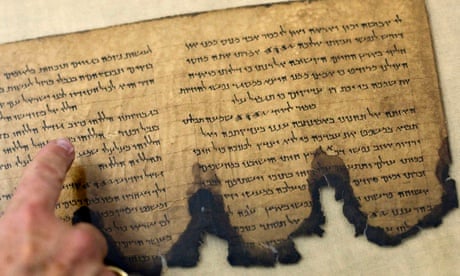
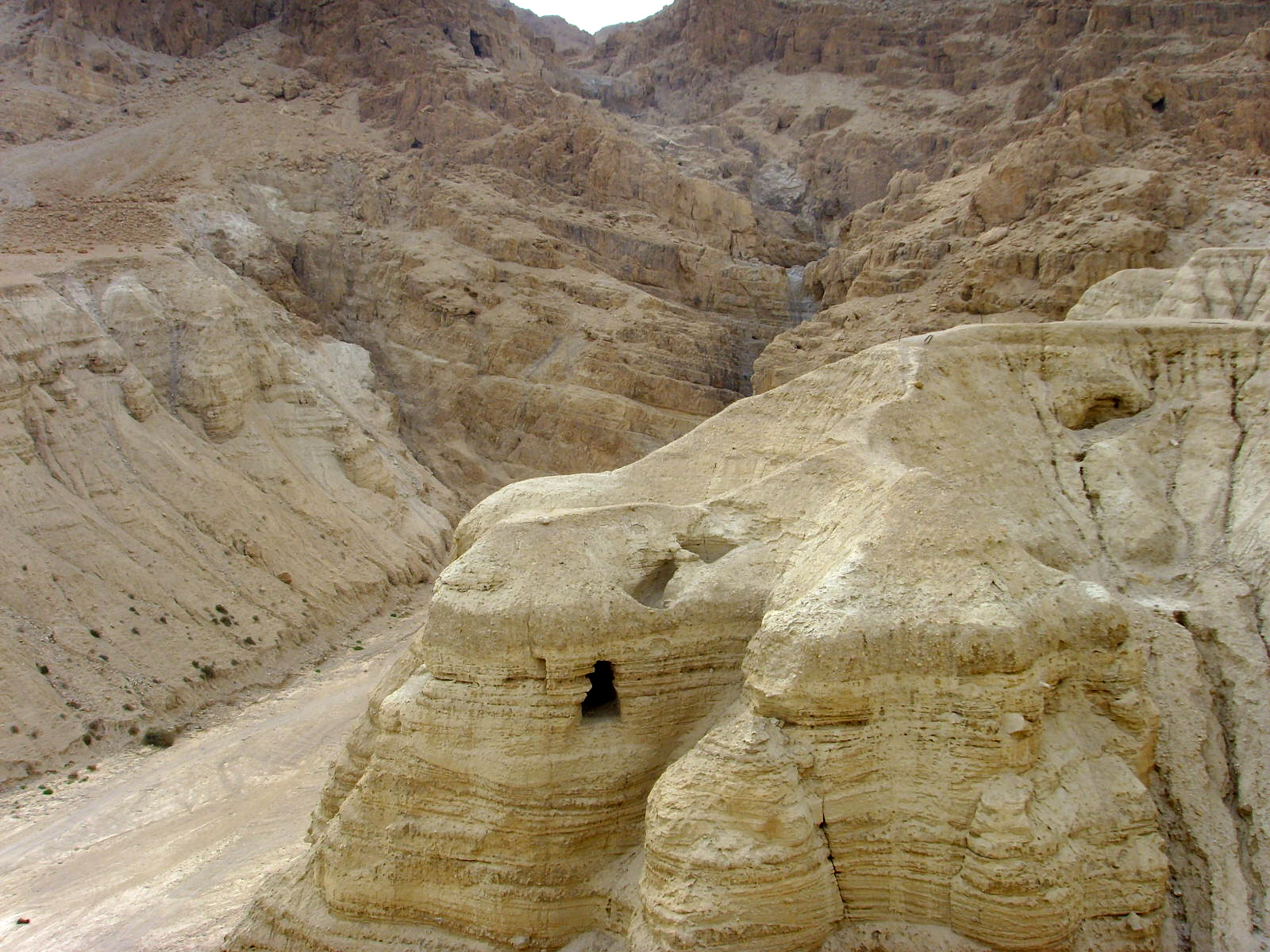
For my third artifact, I picked the Dead Sea Scrolls, which are arguably one of the most important Hebrew cultural artifacts ever discovered. The scrolls were found in 12 different caves near the Dead Sea, close to a place called Qumran in Jordan. A couple of years after the first discovery of a cave, archeologists were able to identify the caves where the scrolls had originally been, which are now called the Qumran caves. Later, the Israeli government was granted permission from Jordan to continue searching the caves, where they found more artifacts like clothing, storage jars, and other cultural artifacts.
I will be talking specifically about the scrolls, which are a collection of ancient Jewish manuscripts from the Second Temple period, which lasted from about 538 B.C. to 70 CE. These manuscripts are extremely important because they are some of the oldest surviving texts from this time period (it seems I say this in every post, because Hebrew and the land of Israel are so old!) Most of the manuscripts are written in Hebrew, but some are written in Aramaic. In my last discussion, I learned that Hebrew and Aramaic are closely related languages within the Canaanite language family. I believe that at the time, Aramaic was the more common language, while Hebrew was used more for religious writing.
The scrolls themselves were written on different materials. Most of them were written on parchment, but some were written on papyrus. One of the most interesting scrolls was even written on copper, which is now called the Copper Scroll. There were around 972 manuscripts or bits and pieces found in the Qumran caves.
Many of the scrolls contain copies of books from the Hebrew Bible, like Genesis, Isaiah, and Psalms. Every book of the Hebrew Bible has been found among the scrolls except for the Book of Esther (wonder why because that’s my middle name). But not all the scrolls had the Bible. Other scrolls had religious laws, commentaries on scripture, prayers, and writings that describe the beliefs and rules of the Jewish community that lived learn Qumran at the time.
The language in the scrolls is especially important because it shows how Hebrew was used during that time period. Some of the scrolls are written in Biblical Hebrew, while others use Mishnaic Hebrew. After learning about the timeline of the Hebrew language, it is very interesting to hear about the different variations of Hebrew being used. I definitely did not expect Mishnaic Hebrew to be on the scrolls.

Replies