
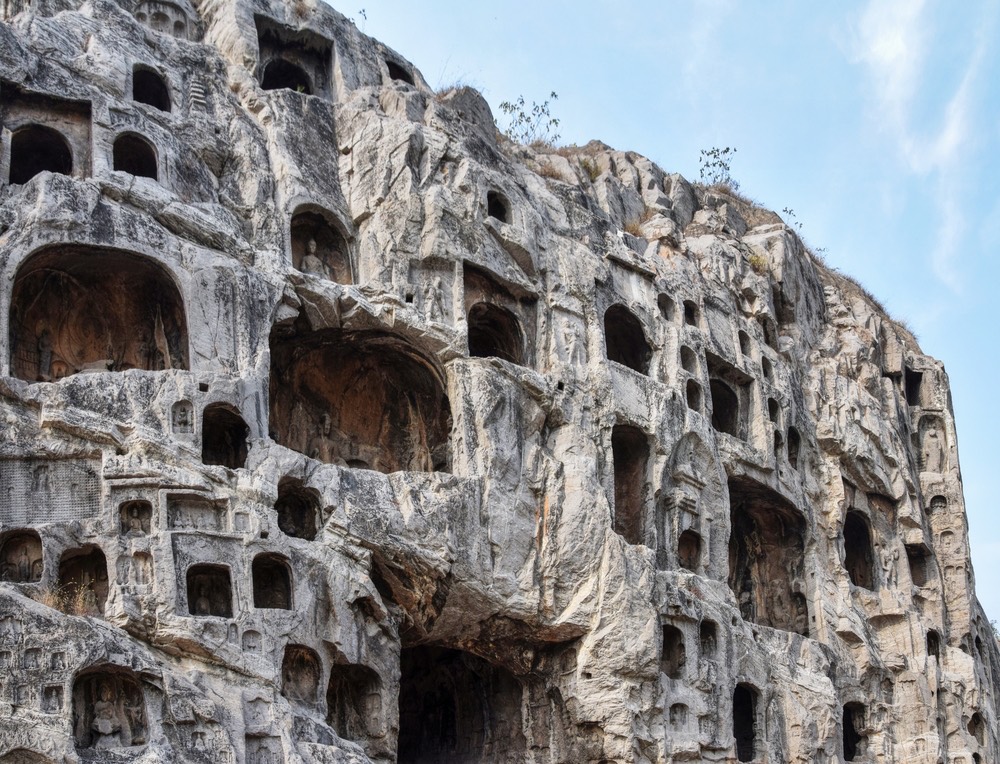
I was unable to paste the image I found, so I have included the link here:
For this cultural post, I wanted to investigate the Silk Road and its historical significance, as it is a topic I have often heard referenced as incredibly important but have found little specific information on. At first, my search terms were too broad, and most sites I visited did not specify a single artifact but did provide extremely interesting and helpful information on the discoveries of artifacts from various regions and cultures at points along the Silk Road, helping me to understand how archaeologists and historians have been able to gather information about the spread of ideas and goods it helped to drive. Eventually, I decided to look more closely at the significance of silk and how it became so central to expanding trade routes, and I was curious about how early silk production developed and impacted the Chinese economy, society, and trade. Soil samples from a Neolithic tomb site in Jiahu (in Henan Province) contain 8,500 year-old prehistoric silk fibers and basic weaving tools, and some believe that people began to breed silkworms and make silk around the area. The Jiahu site is considered to contain some of the oldest silk fibers discovered, and some of the oldest evidence of silk production, although information about when silk became used as a textile seems uncertain (researchers believe that the people buried in the tombs wore silk garments, although this may have been more common for members of the upper class especially in its early stages). Silk was a highly-valued material, and as new techniques emerged, more and more people became employed in producing it, and villages began to develop around silk production. It was even used as currency – it was sometimes collected as a tax and stored by the government or exchanged for purchases. Eventually, by the first century b.c.e., silk had made its way as far as Rome by means of the Silk Road. The Silk Road began during the Han Dynasty as a result of expeditions that were meant to build alliances for security but also ultimately increased awareness of already-existing travel routes, other regions and nations, and goods outside of China. The first expeditions were led by an officer named Zhang Qian, who traveled on the edge of the Taklamakan desert and the Tian Shan mountains; while he was not necessarily successful in establishing the alliances he was meant to, he was able to connect China with people in modern-day Uzbekistan, India, and Persia, and they began to exchange goods and ideas through the network that would come to be known as the Silk Road. Silk was an extremely popular material especially as the Silk Road began, but other materials including precious stones, ceramics, paper, spices, and even plants made their way across the road, and art, music, and religion began to spread across the regions it connected as well. The Silk Road would last until 1453 C.E. with the end of the Ottoman Empire’s trade with the West and is described by one site as “the most important trade route in the world.” Silk had helped to strengthen ancient China’s economy and had also played a major role in driving the systems of trade and exchanges of ideas that reached almost 5,000 miles across Asia.

Replies
That is really interesting that the Chinese were sending embassies to try to learn more about the other civilizations along the trade route. It must have been an incredible journey visiting that many different, very seperate cultures back before the age of globalization. Did China continue to send embassies along the Silk Road routes later on, and did the languages from along the silk road effect Mandarin much?
I think at first the focus was more on shorter-term military alliances right at the beginning, and then travel and diplomacy expanded as trade continued. For example, I just read that a man named Gan Ying was sent as an envoy to the Roman Empire around 97 AD; while he never actually reached it, he did make his way to modern-day Iran and apparently traveled farther than any other Chinese envoy before him. I don't know very much about specific examples of language development through the Silk Road, but I know that languages were often shared as trade routes expanded, and the words for tea deriving from "cha" come from the Mandarin form.